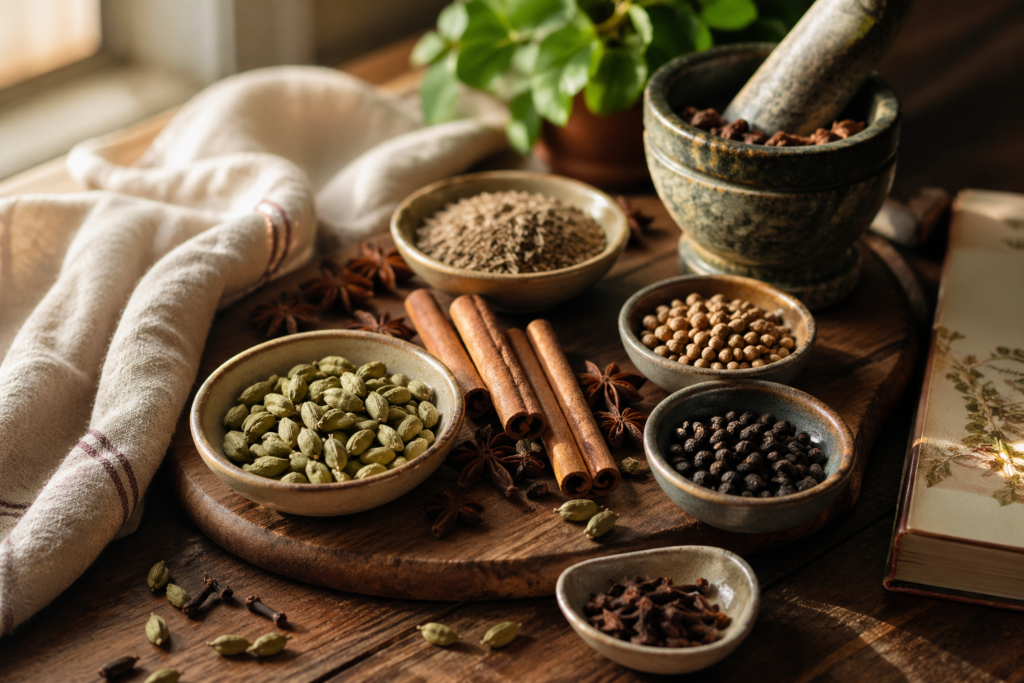
If your home-cooked curry never quite tastes like the restaurant version, the problem probably isn’t the recipe. It’s not your technique either. It’s sitting in your spice cabinet right now, in the form of pre-ground spices that lost most of their flavor six months ago.
Being a Bengali, I always knew about whole spices, but I took them for granted. I never quite appreciated what they did for the flavors until I moved away from home and started cooking with whatever was available at the local grocery store. That’s when I understood the difference.
Whole Spices vs Pre-Ground: Which One Actually Tastes Better?
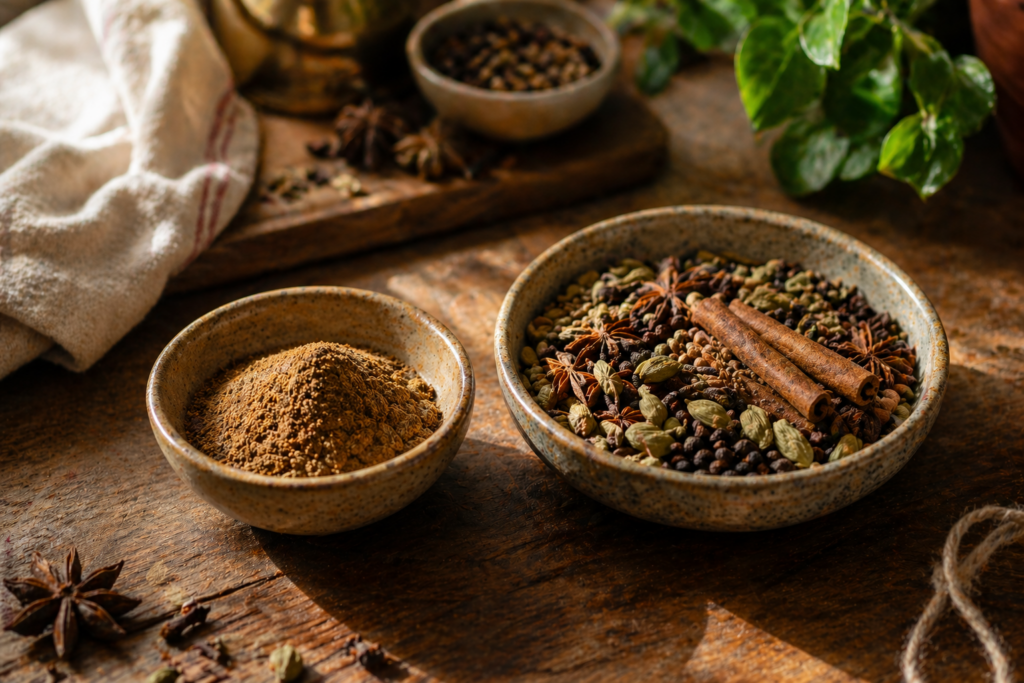
The answer is whole spices, and it’s not even close. But let me explain why.
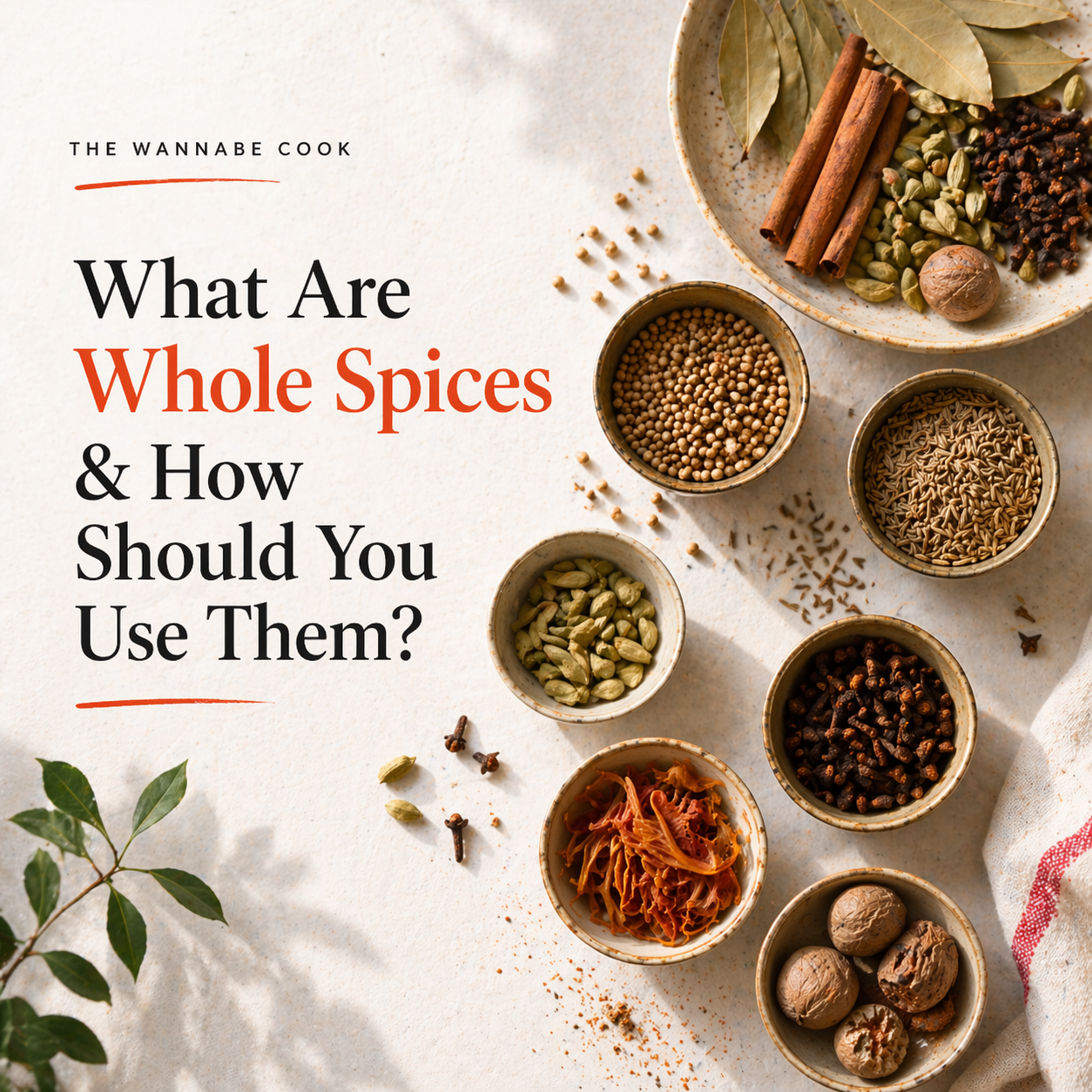
Whole spices are the unprocessed seeds, bark, pods, or roots of plants, exactly as they come from the plant, before they’re ground into powder. Cinnamon sticks are pieces of dried bark rolled into quills. Cumin seeds are small, tan, and ridged. Cardamom comes in green pods that you crack open to find the black seeds inside. Nutmeg is a hard seed that you grate fresh.
That’s it. Nothing complicated.
Pre-ground spices, on the other hand, start losing their potency the moment they’re ground. The essential oils that give spices their flavor begin oxidizing immediately when exposed to air. Within three to six months, most of that flavor is gone. You’re left with colored dust.
Whole spices keep those essential oils locked inside. They stay fresh for one to two years when stored properly, sometimes longer. The flavor doesn’t escape until you’re ready to release it.
Here’s the difference you can taste: fresh-ground cardamom is three times as aromatic as the pre-ground version that’s been sitting in a jar. When you toast cumin seeds in a dry skillet for just one minute, they release oils that pre-ground cumin simply cannot match anymore. The kitchen fills with that earthy, warm aroma.
Why Your Spice Rack Might Be the Reason Your Cooking Feels Flat
If your food consistently tastes bland despite following recipes exactly, check your spice rack. Those jars of pre-ground spices sitting there for months are likely the culprit.
With whole spices, you control everything. The grind size, whether to use them whole or ground, when to toast them. With pre-ground spices, someone else made those decisions for you months ago, and by the time you use them, most of the flavor has already left.
One cardamom pod contains multiple seeds. A teaspoon of ground cardamom might come from five or six pods. If you buy whole, you’re getting more flavor for less money because you’re not buying something that’s already half-dead.
And because whole spices last so much longer, you’re not throwing away half a jar of stale powder a year from now.
Why Whole Spices Matter Beyond Just Taste
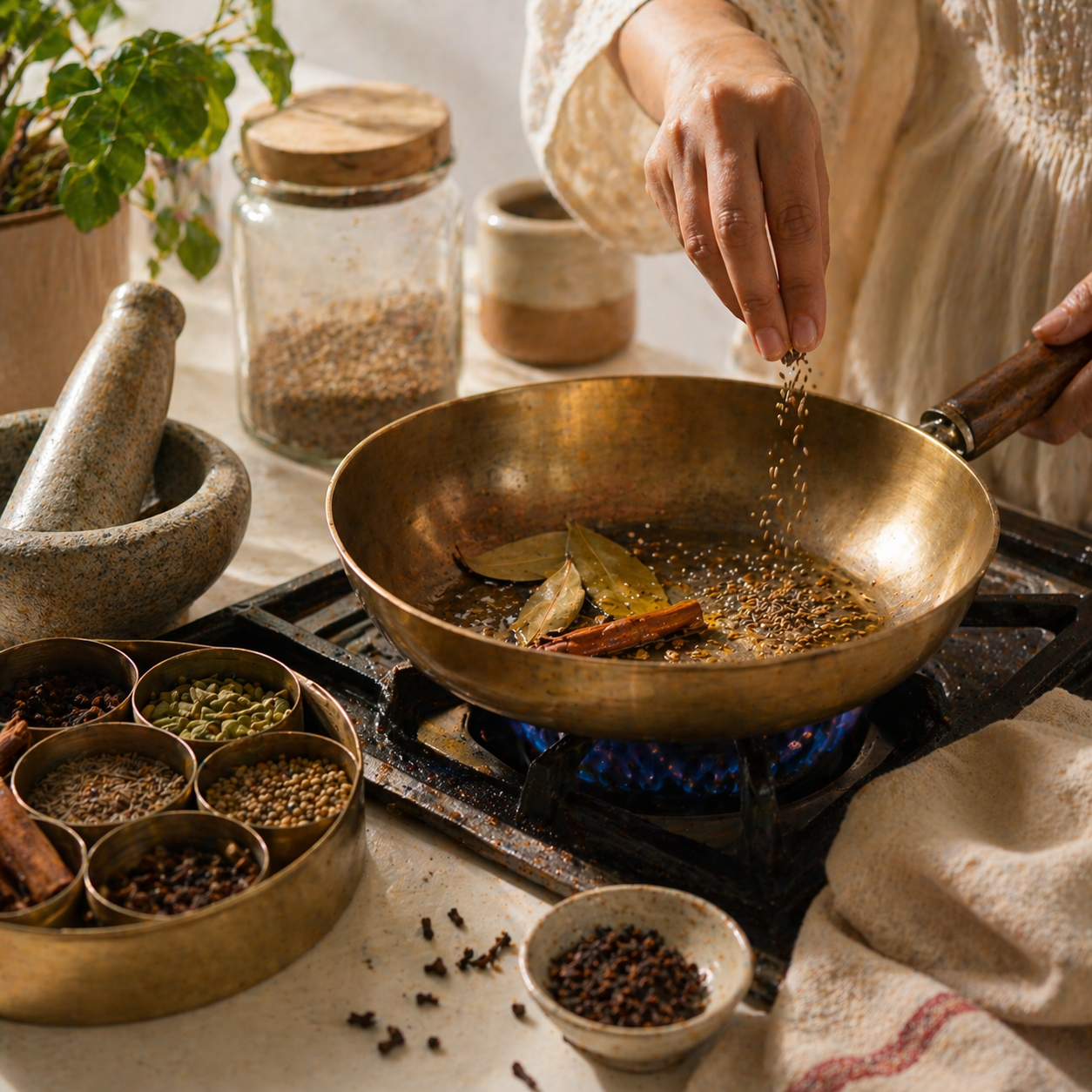
At first, using whole spices might seem like extra work. But toasting those cumin seeds, hearing them crackle in the pan, smelling them bloom, it pulls you into the moment. It changes how you experience cooking. Instead of a chore you’re trying to get through, it becomes a pause. A reset at the end of the day.
Pre-ground spices are a modern convenience. And I’m not against convenience. But they came at a cost, as most things do.
As a Bangladeshi, I know my grandmother, or even my mother, never used pre-ground spices. They toasted whole seeds in a hot pan. They ground them fresh in a mortar and pestle. The sound of that grinding, the smell of those spices filling the house, that was part of cooking. That was part of our childhood home.
The smell of curry or biriyani that wafted through family kitchens, the ones we remember so clearly, came from whole spices. From spices that were alive with flavor. You can’t get that from a jar of powder that’s been sitting on a shelf for months.
The 4 Essential Whole Spices to Start With
You don’t need to buy twenty different spices. Start with these four. Learn them. Use them. See what happens.
Cinnamon: Sweet & Savory Magic
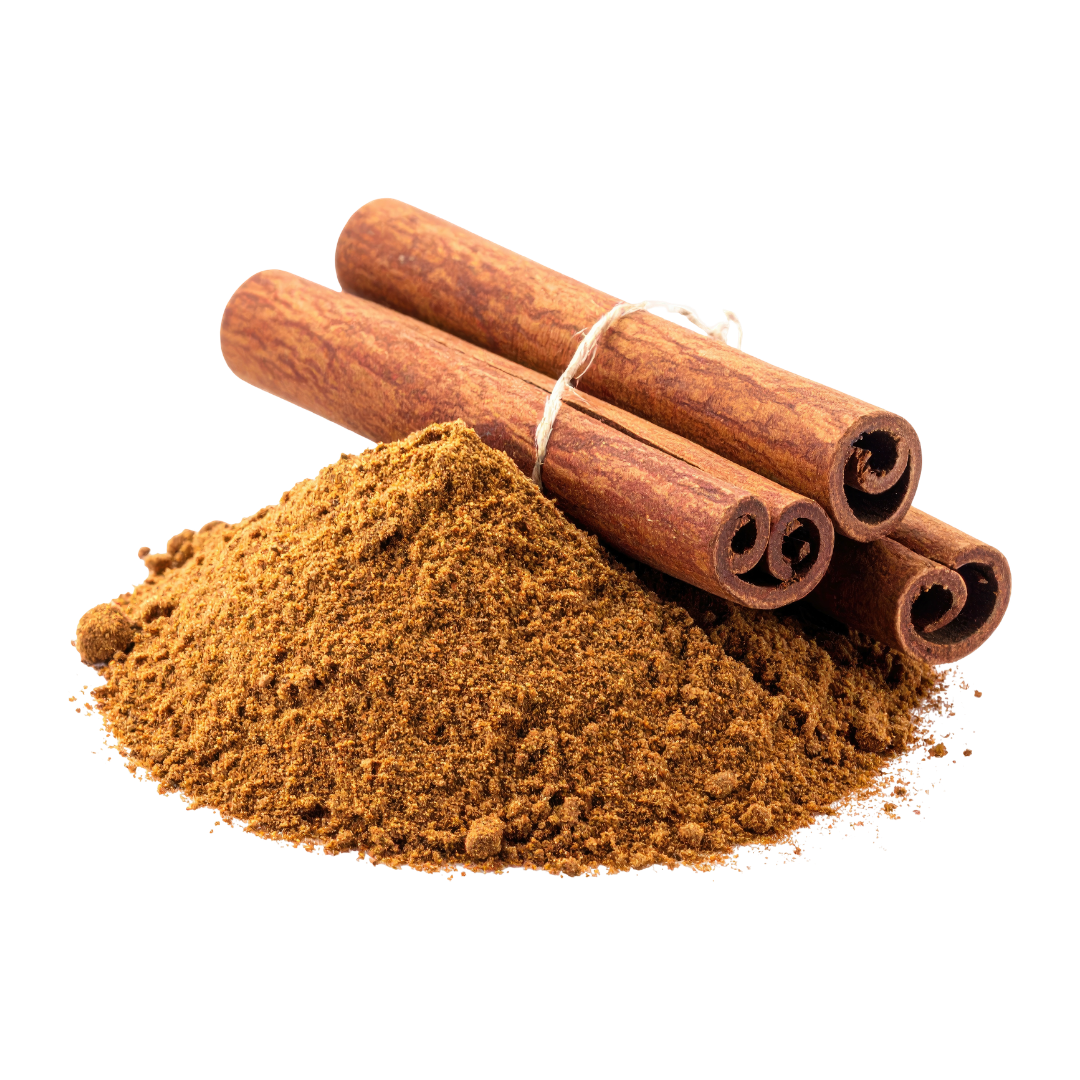
Cinnamon is dried bark rolled into quills. It’s warm and slightly sweet, but also woody and complex. Most people only use it in desserts or coffee, but cinnamon works in savory dishes too. Add a stick to your rice while it cooks. Drop one into a curry.
Quality cinnamon should smell sweet and warm the moment you open the container. The quills should be flexible, not brittle.
Cumin: The Earthy Foundation
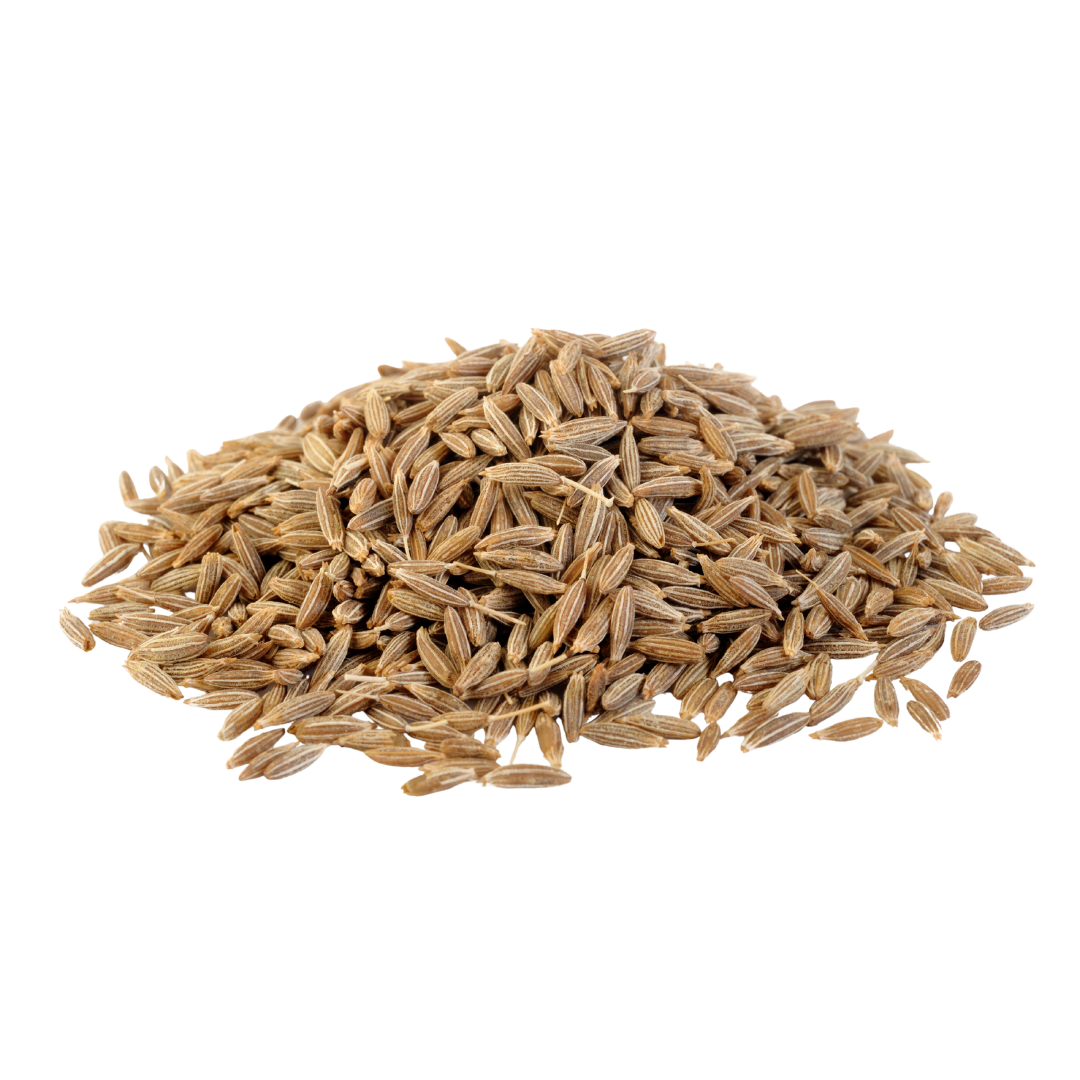
Cumin seeds are small, tan, and ridged. The flavor is earthy and warm, almost nutty. This is the workhorse spice. It goes in curries, roasted vegetables, rice dishes, even tacos.
Cumin is where toasting makes the biggest difference. One minute in a dry skillet over medium heat, and you’ll understand what I mean. The flavor deepens. It becomes richer.
Cardamom: The Queen of Spices
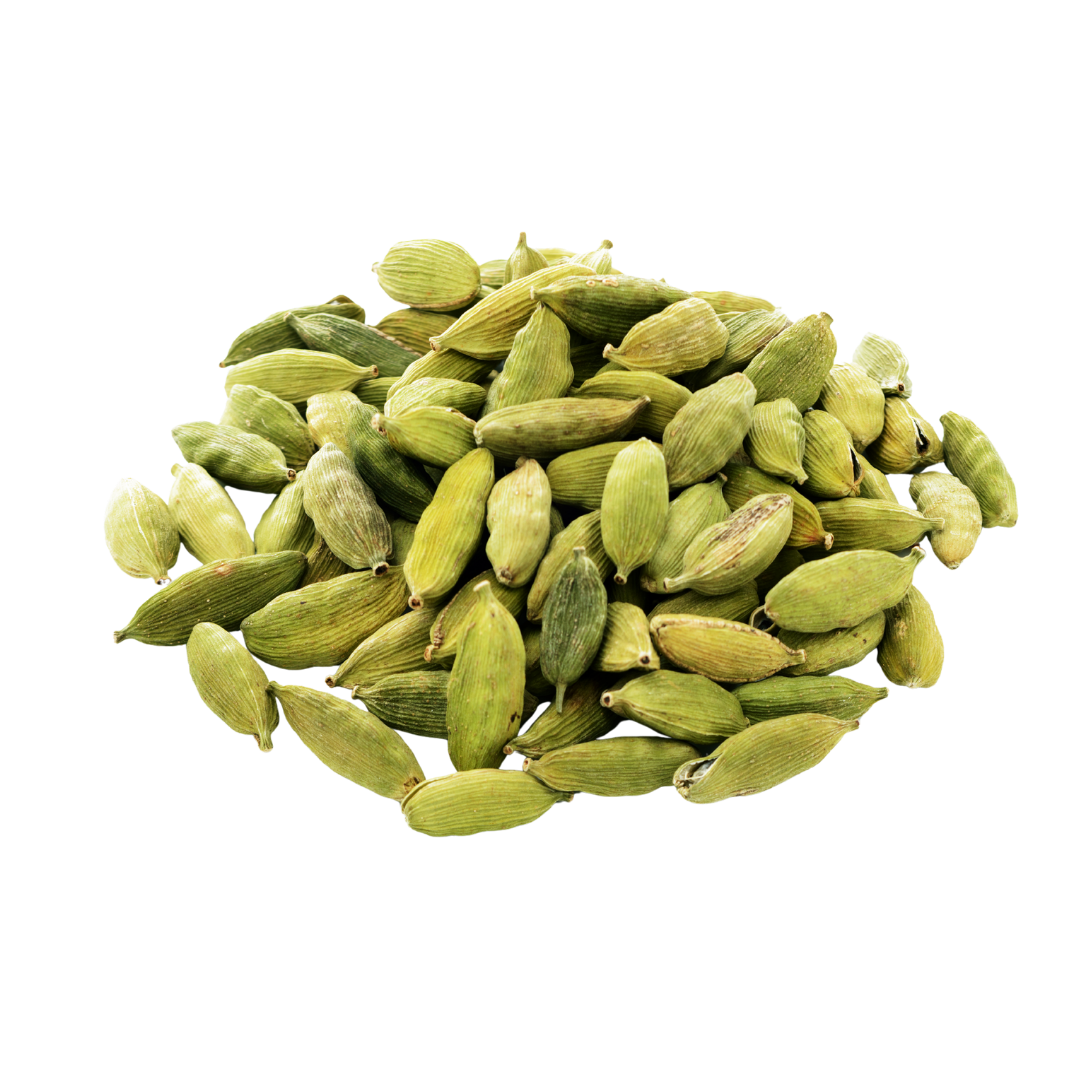
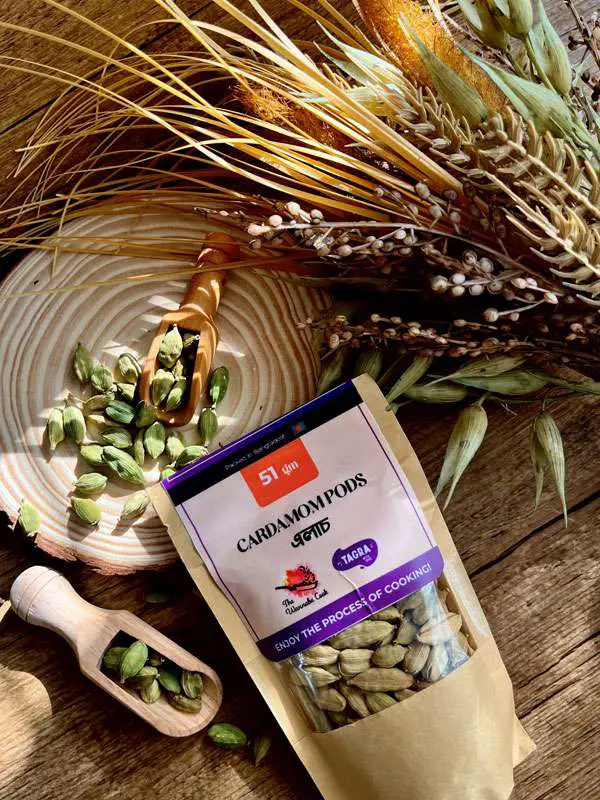
Cardamom comes in small green pods. Inside each pod are tiny black seeds. The flavor is complex, warm and slightly sweet with hints of mint and a floral quality that’s hard to describe.
Cardamom works in sweet dishes, savory dishes, chai, rice, desserts. A single cardamom pod can scent an entire room.
Quality cardamom pods should feel plump and heavy. Crack one open. The seeds inside should be moist and fragrant.
Nutmeg: The Dual Spice
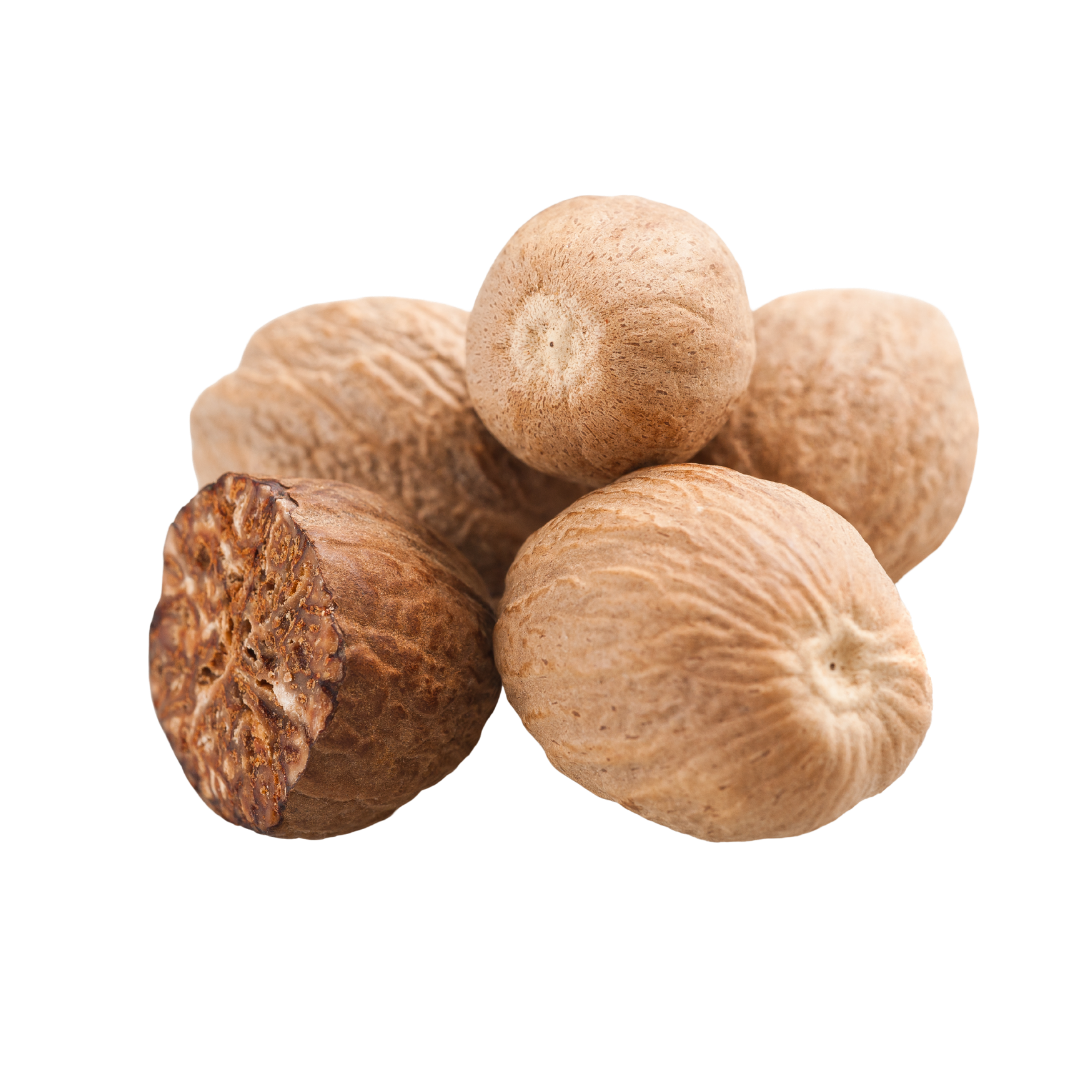
Nutmeg is a hard seed that you grate fresh over dishes. The flavor is warm, slightly sweet, with an earthy, almost spicy undertone. It’s subtle, but it rounds out flavor in a way that’s hard to explain until you’ve tasted it.
Use nutmeg in warm milk, soups, creamy sauces, baked goods. A simple microplane grater works perfectly. Grate just what you need, right before you add it.
Your Next Step: Start Here
You don’t need to overhaul your entire kitchen. Start with these four. That’s it.
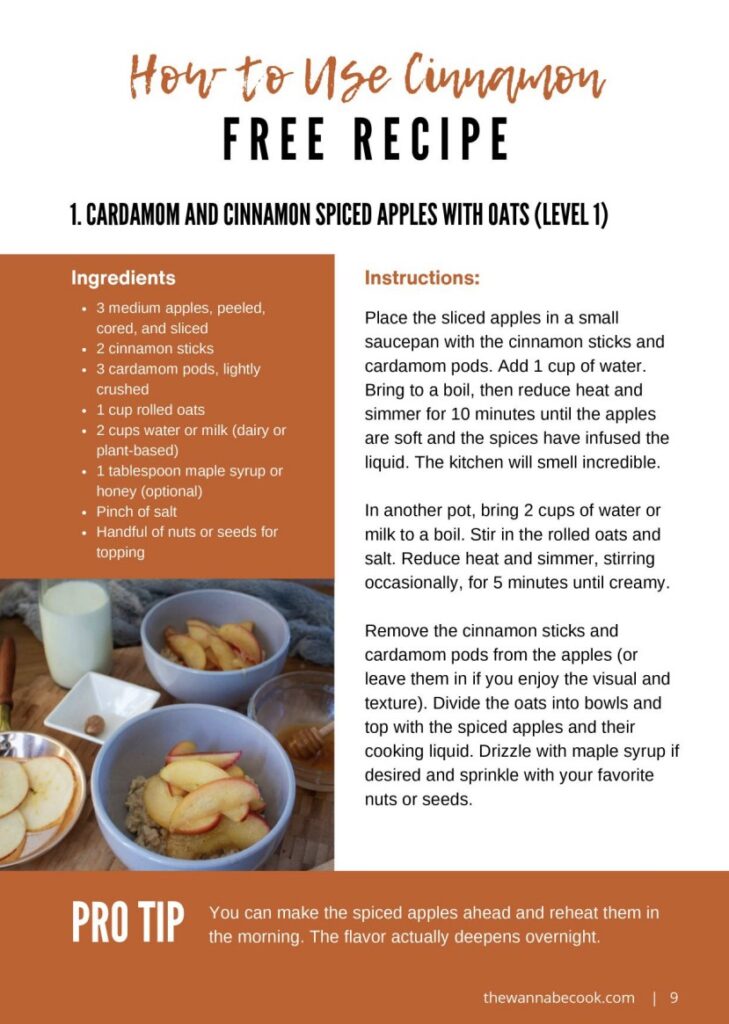
We’ve put together a free guide that covers everything: what each spice tastes like, how to choose quality, how to store them so they stay fresh, and eight beginner-friendly recipes you can try tonight. Nothing complicated or intimidating.
These recipes won’t change your life. But they might change your Thursday night.
Download the free spice guide →
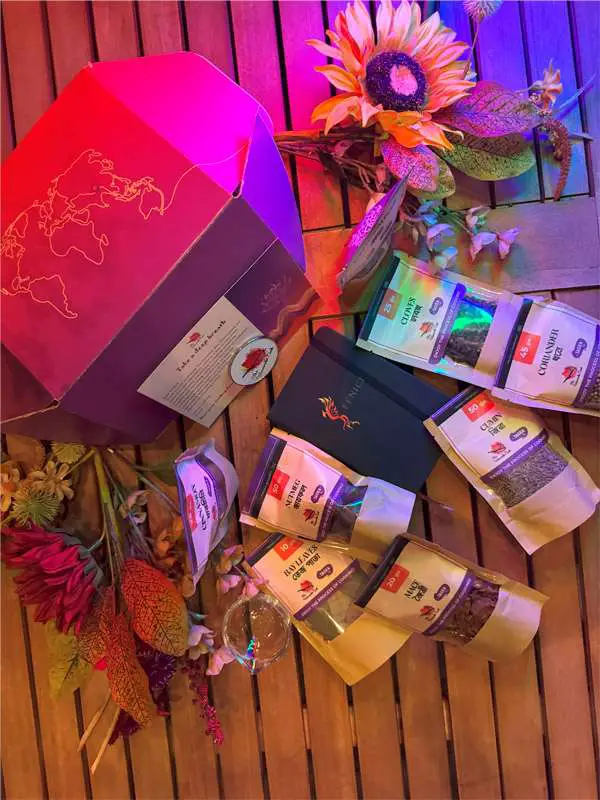
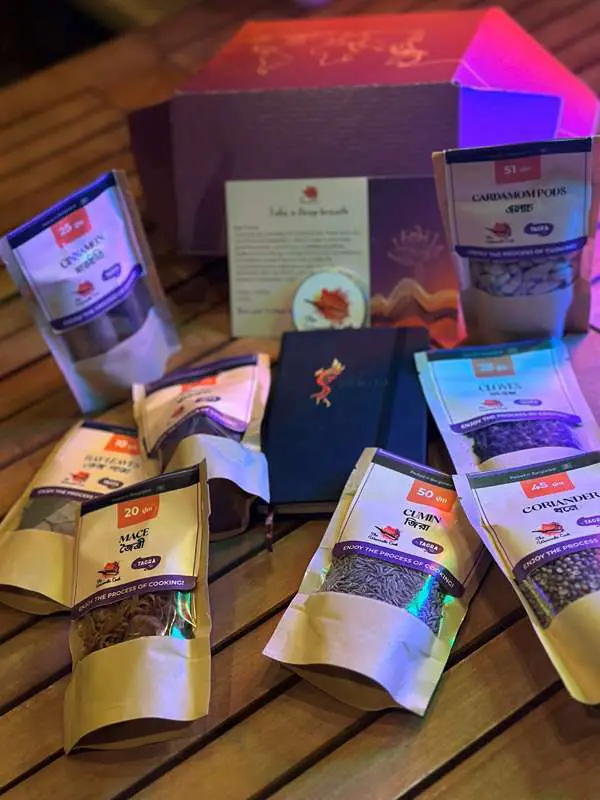
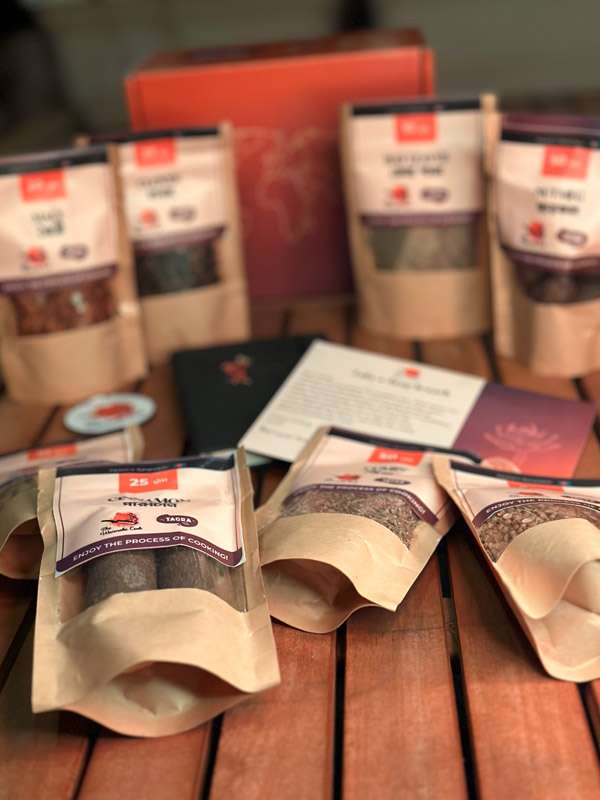
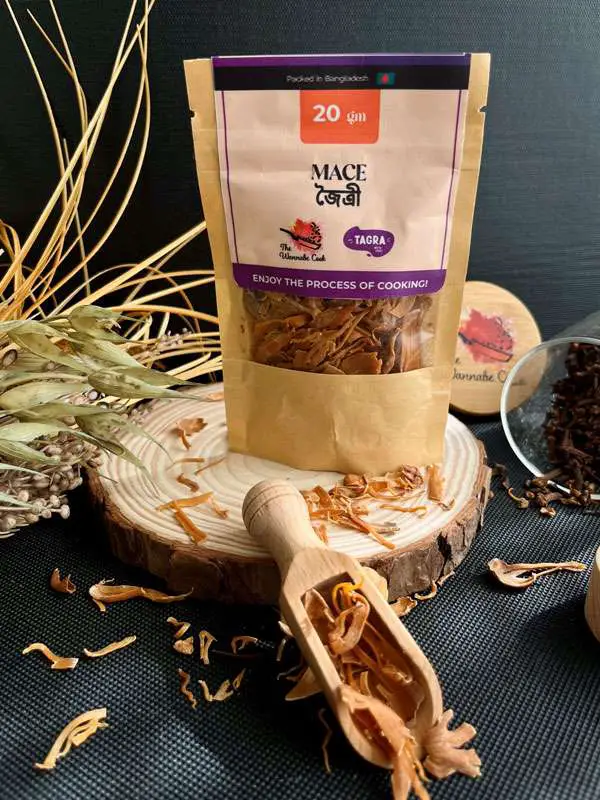
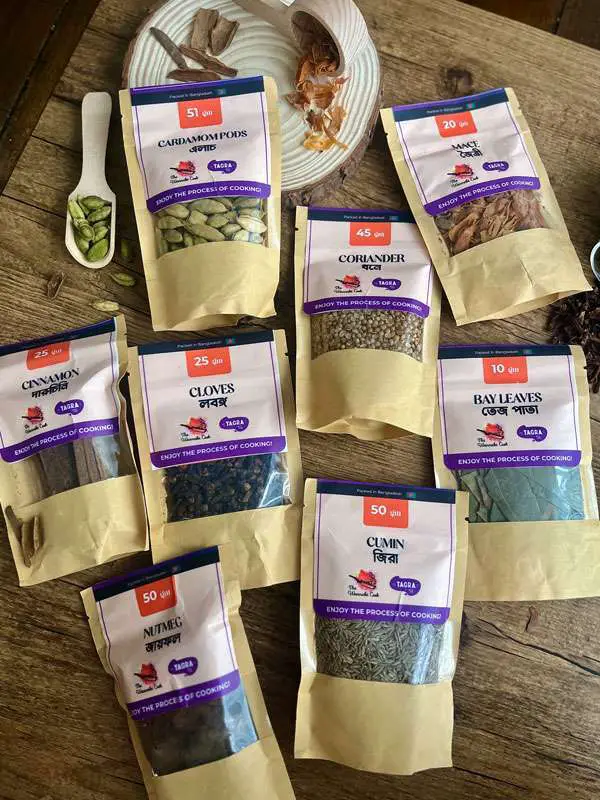
And if you’d rather have everything in one place – the spices themselves, the recipes, the guide, and even a journaling notebook. Then our 8 Whole Spice Box includes all of that. It’s designed for people who are tired of flat-tasting food and ready to try something different.


Follow Us: