

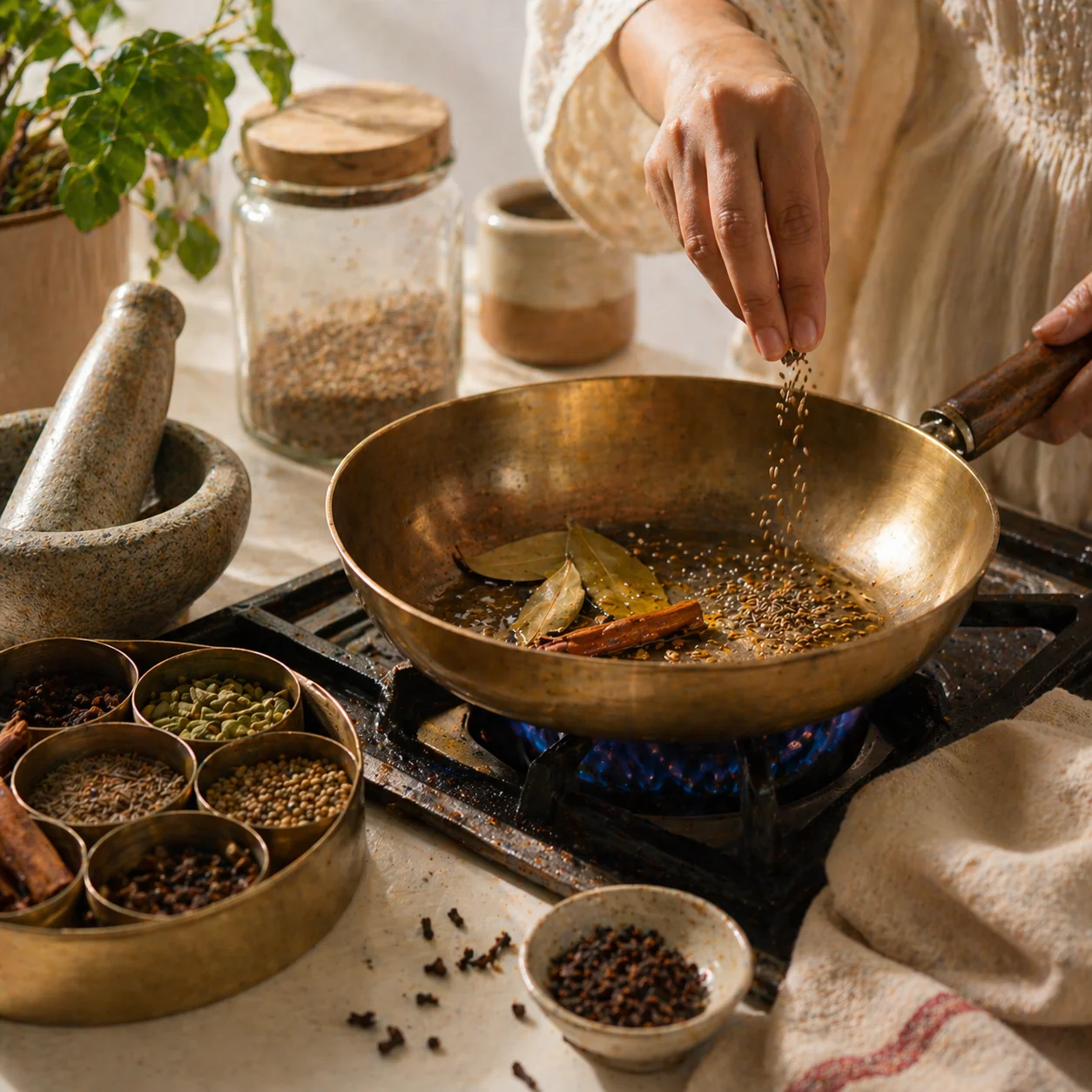
I always knew that turmeric, ginger or cumins weren’t just for flavor, they were medicinal too. But to me they were always just primarily about adding flavor and taste to our food.
But working with whole spices made me curious. What were we losing by switching to the convenient pre-ground versions?
Turns out, quite a bit.
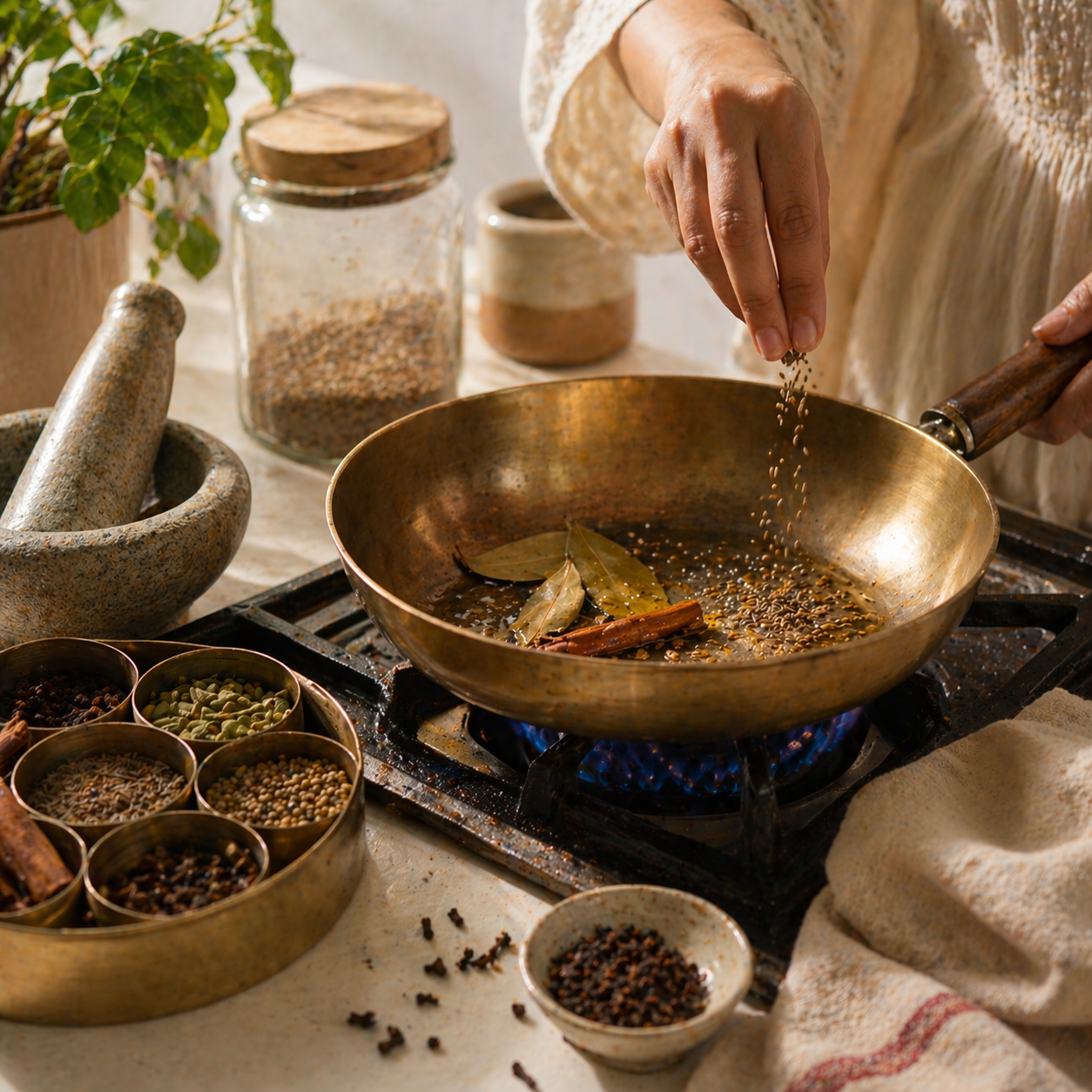
What Happens When You Swap Pre-Ground Spices for Whole Ones?
The most immediate difference is flavor, obviously. But there’s something else happening that you can’t taste directly. The compounds that give spices their health properties start breaking down the moment spices are ground.
Fresh-ground cinnamon has more of the compounds that help regulate blood sugar. Freshly toasted and ground cumin retains more of the oils that support digestion. Cardamom loses its volatile oils, the ones with anti-inflammatory properties, when it sits as powder in a jar for months.
I’m not saying whole spices are medicine. They’re not. But they do retain more of what made them useful in traditional cooking and home remedies for centuries.
When you use whole spices, you’re getting them closer to their original form. Closer to how they were used before we decided that everything needed to be pre-processed and shelf-stable for years.
The Wellness Benefits Worth Knowing About
Digestive Support
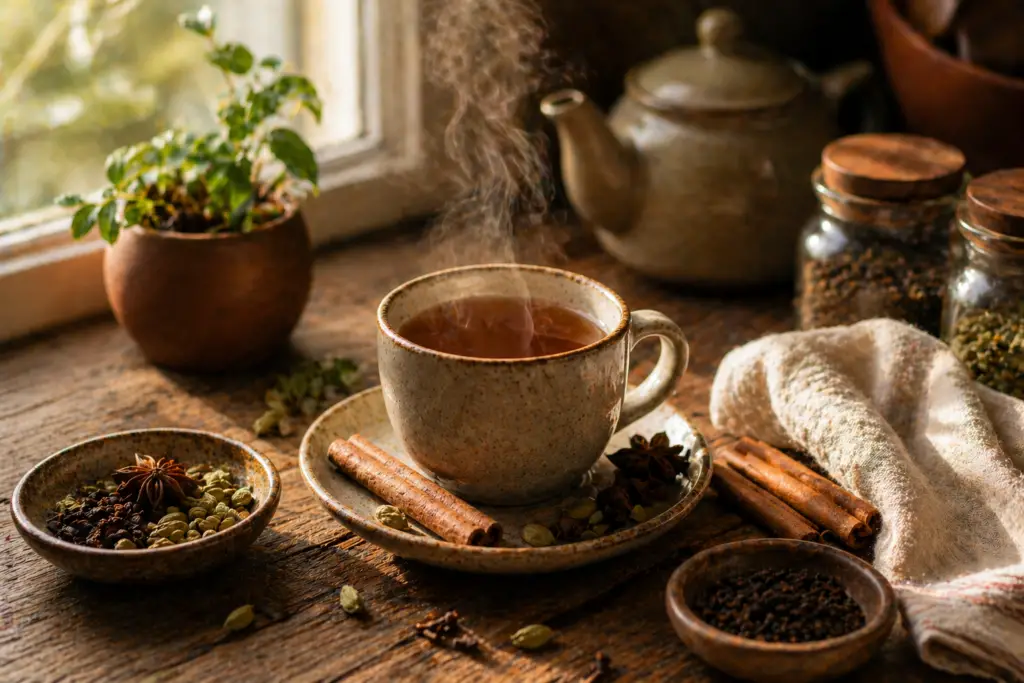
Cumin, coriander, and fennel have been used in South Asian cooking specifically because they help with digestion. My grandmother would toast cumin seeds and add them to dal because she knew it would help settle your stomach after a heavy meal.
Ginger and cardamom work similarly. This is why many people look for chai after meals in Bengali households.
When these spices are fresh and whole, those digestive properties are stronger. The essential oils that help stimulate digestion are still intact.
Anti-Inflammatory Properties
Cinnamon, turmeric, ginger, cloves — these show up in research on inflammation again and again. Not as cure-alls, but as foods that have measurable anti-inflammatory compounds.
The problem is that those compounds are fragile. They break down with heat, light, and air exposure. Pre-ground spices have been sitting exposed to all three, sometimes for months before you even buy them.
Whole spices protect those compounds until you’re ready to use them. You toast them, you grind them, you add them to your food. and you’re getting them at their peak.
Blood Sugar and Metabolism
Cinnamon has been studied for its effects on blood sugar regulation. Not enough to replace medication, obviously. But enough that it’s worth including in your diet if you’re managing blood sugar levels.
Fenugreek seeds, commonly used in Bengali cooking, have similar properties. But again, only if they’re fresh. Old, stale spices aren’t doing much of anything.
Why Cooking with Whole Spices is a Wellness Habit Worth Starting
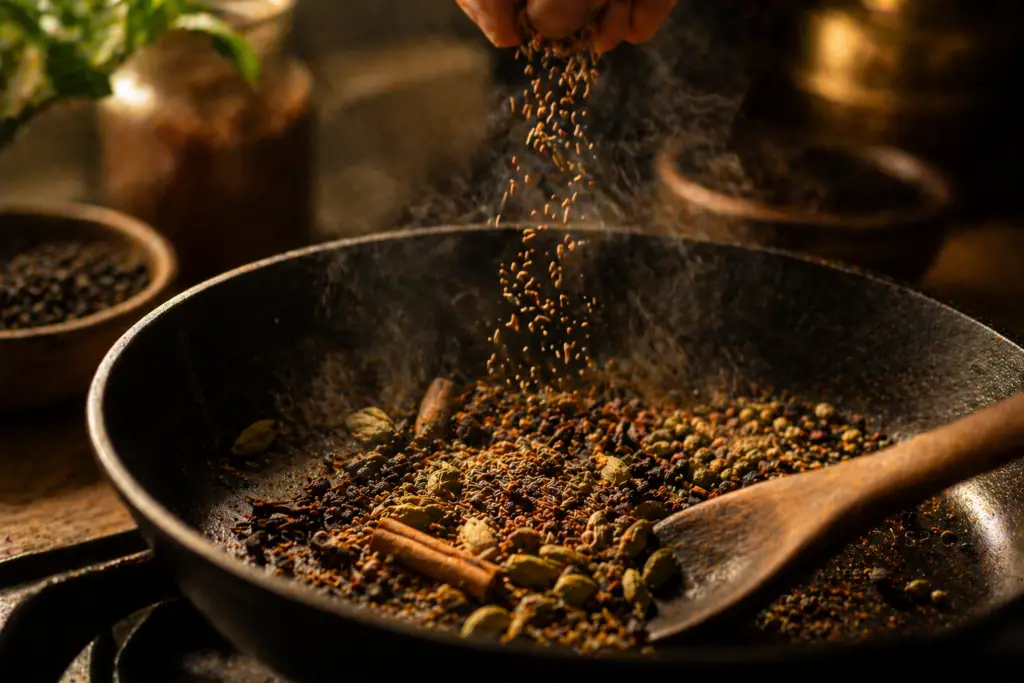
Here’s where it gets interesting. The health benefits aren’t just in the spices themselves. They’re in the process of using them.
When you take two minutes to toast cumin seeds, to smell them as they warm, to grind them fresh. You’re not rushing. You’re not scrolling through your phone while something heats up in the microwave. You’re present. You’re paying attention.
That shift in how you approach enhances the cooking experience. Instead of seeing cooking as one more task to check off, it becomes something that grounds you. A pause in the day. A moment where you’re using your hands, engaging your senses, creating something.
I didn’t start cooking with whole spices for wellness.
I started because I wanted my food to taste better. But the side effect was that cooking became something I looked forward to instead of something I dreaded.
This way cooking can have an impact on your mental health too.
The Mindfulness Angle No One Talks About

There’s a wellness trend right now around mindful eating—paying attention to your food, eating slowly, being present for the meal. But what about mindful cooking?
Using whole spices forces you to slow down just a little. You can’t just dump pre-ground powder into a pan and walk away. You have to toast the seeds. You have to engage your senses. You have to grind them.
It’s not meditation. It’s not a formal mindfulness practice. But it’s a few minutes where you’re fully engaged with what you’re doing.
For people dealing with stress, anxiety, or just the general overwhelm of modern life, that might be the most valuable health benefit of all.
Start Cooking for Yourself, Without Overthinking It
You don’t need to turn your kitchen into an apothecary. You don’t need to memorize which spice helps with what condition. You don’t need to buy fifteen different varieties and start grinding everything from scratch.
Start with four: cinnamon, cumin, cardamom, nutmeg. Use them in your regular cooking. Notice the difference in flavor. Notice the difference in how you feel while cooking.
If you want the health benefits, the best thing you can do is just use them. Regularly. In normal amounts, in normal food.
Our free guide walks you through exactly how to do that—what each spice tastes like, how to use it, and eight simple recipes that make it easy to start. No wellness jargon, no complicated techniques.
Download the free spice guide →
If you’re interested in building cooking into a more intentional practice, something that supports your mental health as much as your physical health, the 15-Day Wellness & Cooking Challenge walks you through that process. It’s not about perfection. It’s about building a habit that actually feels good.
Explore the 15-Day Challenge →
Frequently Asked Questions
Do whole spices have more health benefits than ground?
Yes, generally. The compounds that give spices their health properties—antioxidants, anti-inflammatory oils, digestive enzymes—start breaking down as soon as spices are ground. Whole spices keep those compounds intact until you use them.
How much of a difference does using whole spices really make?
Fresh-ground spices can have two to three times the potency of pre-ground versions that have been sitting for months. That applies to both flavor and the active compounds that contribute to health benefits.
What's the easiest way to start using whole spices?
Start with one or two spices you already use regularly. Buy them whole instead of ground. Toast them when a recipe calls for them. Notice the difference. Then expand from there.
Are there any risks to using whole spices?
Not really, as long as you’re using them in normal cooking amounts. Some people have allergies to specific spices, but that’s true whether they’re whole or ground. If you’re pregnant, on medication, or managing a health condition, check with your doctor about any dietary changes. But cooking with spices in typical amounts is generally fine.
Community
Join the conversation.
Share a thought, a question, or what this story brought to mind.