

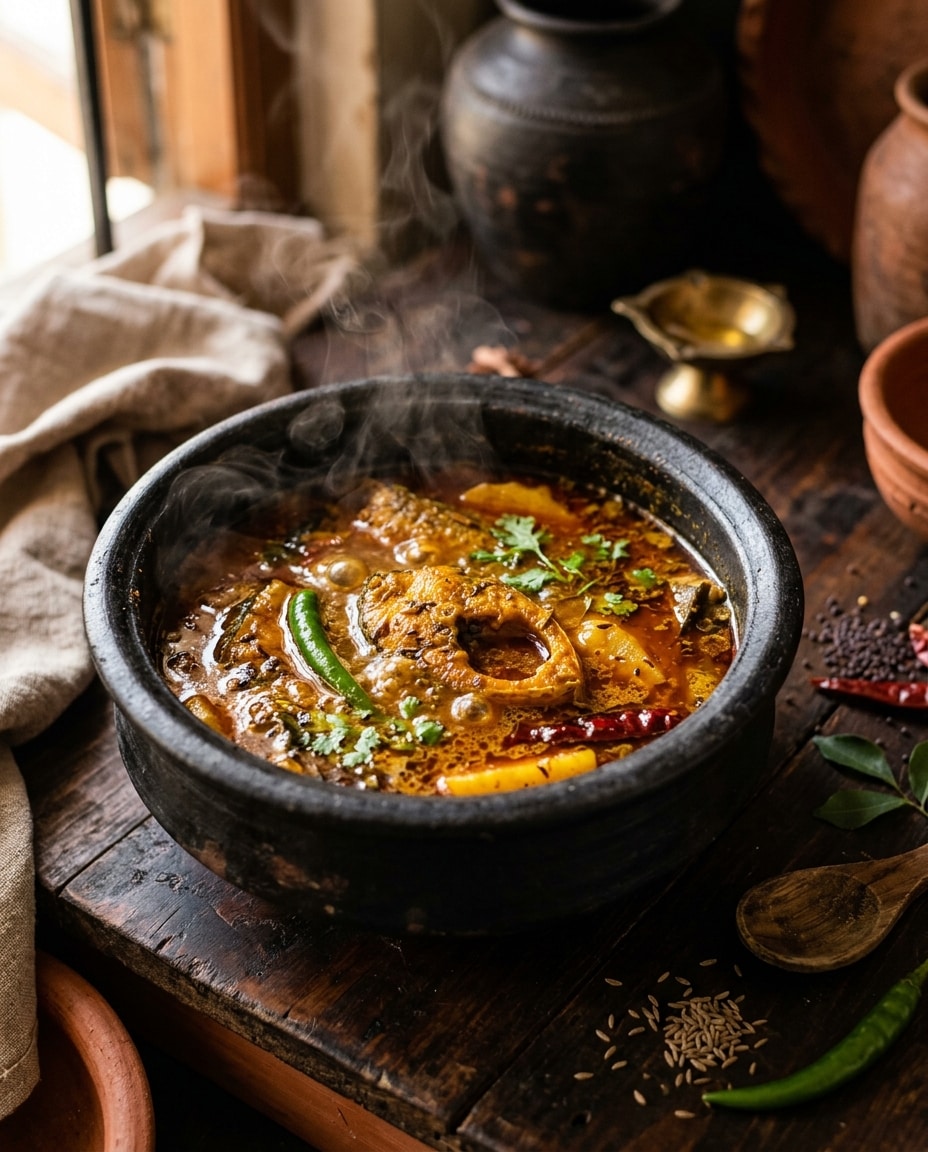
Bengali Cooking · Curry Methods
Mastering the curry, step by step.
Bengali curry isn't one recipe — it's a method. Whole spices crackle in hot oil, aromatics build a base, ground spices fry briefly, the main ingredient goes in, and a final touch balances the whole pot. Learn the method once and a hundred recipes open up. This page breaks it into five stages.
The method
Five stages, one curry.
Almost every Bengali curry follows this arc. The ingredients change; the structure doesn't.
Phoron — the temperingফোড়ন
The opening move. Whole spices — mustard seed, cumin, fenugreek, dried red chilli, bay leaf — go into hot oil or ghee and crackle. Their essential oils release into the fat, and that flavoured fat carries the seasoning through the entire dish. Get this right and the curry is half-cooked before anything else goes in.
Tip · Heat the oil until it shimmers, then drop in one mustard seed. If it crackles at once, the oil is ready. Burnt phoron tastes bitter — pull the pan off the heat if the spices darken too fast.
The base — onion, ginger, garlic
Once the spices bloom, the aromatics build the body. Onions are sweated down until golden and sweet (rushing this is the #1 reason a curry tastes flat); ginger and garlic paste follow. This is where the gravy gets its depth and slight sweetness.
Tip · Onions don't shortcut. Cook them low and slow until they're properly golden brown — ten patient minutes beats thirty rushed ones. The colour of your onions is the colour of your curry.
Bhuno — frying the spice
Ground spices — turmeric, cumin, coriander, chilli, sometimes garam masala — go in and are fried briefly in the oil-onion base. This 'cooks out' the raw edge of the spice and deepens the flavour. A splash of water stops them scorching.
Tip · Spices burn in seconds. Keep them moving, add a tablespoon of water if they catch, and fry just until the oil separates from the masala and rises to the surface.
The main + the liquid
Now the hero ingredient goes in — fish, mutton, vegetables, lentils — and is coated in the masala. Water or a thin stock is added to form the gravy (jhol for a light soup, jhal or kosha for something richer and thicker). It simmers until the main is cooked through and the flavours marry.
Tip · For fish, add it last and gently — it falls apart if stirred. For mutton, low and slow; a rushed curry is a tough one.
Finishing — balance & aroma
The last touch tunes the dish: salt, a squeeze of lime or a pinch of tamarind for acid, sometimes a half-teaspoon of sugar (the quiet Bengali secret that rounds everything). A pinch of garam masala and fresh coriander go on at the end, off the heat, so their volatile aromas survive.
Tip · If it tastes flat, it's almost never more spice you need — it's salt, acid, or that pinch of sugar. Taste and adjust before it reaches the table.
The point of it all
From recipe to instinct.
The reason your grandmother never measured anything.
Recipes written down are snapshots — one version, frozen. The method behind them is a living thing: once you can feel when the onions are ready, smell when the spices have cooked out, and taste when a dish needs acid instead of salt, you stop needing the page.
That's the whole goal of this section. Not to give you a recipe to copy, but to hand you the five-stage structure so that the next time you're standing over a pot, you know what comes next — and why.
Cook the method tonight.
Every Bengali recipe here is built on these five stages. Pick one and put it into practice.