Thai Sharpunti
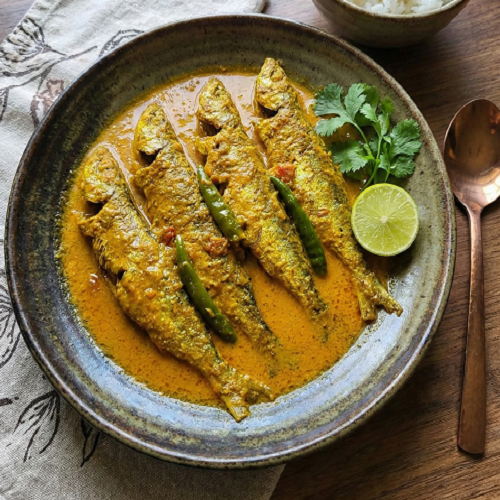
 Growing up, Thai Sharpunti—or silver barb—was just another fish on the dinner table. I can bet that not a single Bengali would name Sharpunti as their favorite fish. Not because it tastes bad or anything, its a perfectly okay testing fish, But thats the thing, its okay not anyhing fancy. As we Bangladeshis are privileged to have a hge variety of fish options on our plate, a humble fish like Sharpunti was just not charming enough. It was just a regular part of home-cooked meals. But looking back now, I realize this humble fish was quietly doing a lot of good. It was an affordable fish, widely available, and surprisingly packed with nutrients that actually matter for everyday health.
Thai Sharpunti (scientifically Puntius gonionotus) came to Bangladesh from Thailand back in 1977. It’s a plant-eating fish that can grow basically anywhere with water, including rivers, ponds, and even floodplains. It can get pretty big, up to 45 cm long and over 2 kg in weight.
Identification and Physical Characteristics
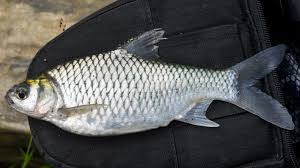 Thai Sharpunti has a flat, oval-shaped body with a slightly raised back. Its head is small, with a pointed mouth, and it usually has very tiny or no visible barbels. When fresh, the fish appears silvery white, sometimes with a light golden shine. The fins are mostly gray, with hints of yellow or orange, especially on the pelvic and anal fins. Overall, it’s a clean, simple-looking fish that’s easy to recognize in local markets.
Culture Potential and Advantages
Thai Sharpunti is well-suited for small-scale and semi-natural farming. It grows fast, survives well in seasonal ponds and canals, and does not require expensive feed. Because it eats mostly plants, farming this fish is very low in cost. Moreover, this fish can adapt to different water conditions, making it a reliable choice for farmers. Especially in areas where other carps may struggle. For many fish farmers, it turns unused or low-value water bodies into a steady food and income source.
Nutrient Composition of Thai Sharpunti (per 100g raw edible parts)
- Protein: 18.4 g
- Fat: 4.4 g
- Calcium: 270 mg
- Phosphorus: 280 mg
- Iron: 1.6 mg
- Zinc: 1.8 mg
- Vitamin A: 12 μg
- Vitamin B12: 2.2 μg
- Vitamin D3: 23 μg
Plus smaller amounts of iodine, selenium, magnesium, potassium, and folate.
Health Benefits of Adding Thai Sharpunti to Your Diet
Heart Health: Thai Sharpunti contains niacin and phosphorus that balance cholesterol levels, lower bad cholesterol, and support good cholesterol. This reduces strain on blood vessels and supports heart function.
Good Skin and Hair: Vitamin A from this fish keeps skin clear, supports repair, and slows aging. Protein from this fish helps skin heal, while niacin from the fish helps with acne.
Muscles and Bones: Protein and phosphorus from this fish maintain muscle mass and bone density: Phosphorus also supports muscle movement and steady heartbeat.
Brain Function: Niacin and phosphorus from the fish help nerves send signals smoothly, supporting focus, memory, and mental clarity.
Eyes and Immunity: Vitamin A found in this fish supports eye health and night vision. Combined with protein, it strengthens the immune system against infections.
Pregnancy Support: This fish provides protein important for baby’s growth. It is also a good source of niacin and phosphorus that maintain hormonal balance and maternal health.
An Important Dietary Note
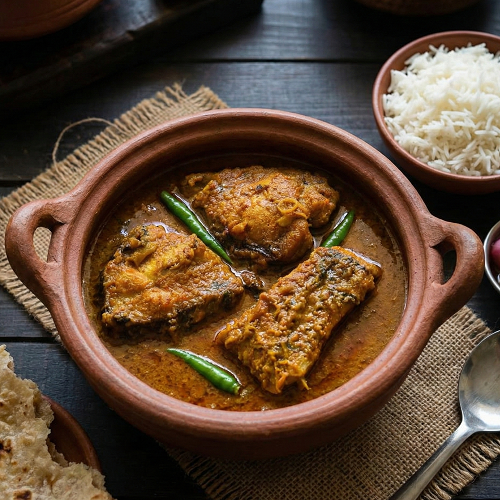
Sarpunti is healthy, but portion size matters. About 100 grams contains 1.2 grams of fat and minimal sodium. It’s naturally low in both, making it suitable for most diets, including those watching weight or managing heart health. Simple Asian-style home cooking works best. The key is using oil and salt in moderation and avoiding heavy deep frying or excessive sauces. Prepared simply in a light curry, jhol, or gently pan-cooked dish, Sarpunti fits perfectly into a healthy, balanced everyday diet.
Bengali Recipes with Thai Sharpunti
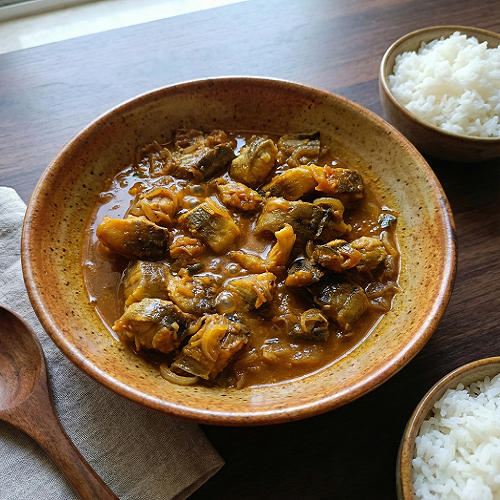
Thai Sharpunti with Flat Beans (Shim Diye Sorpunti)
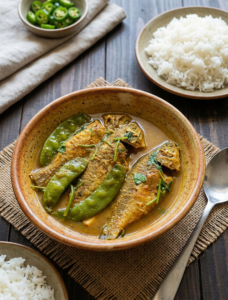 In Bengali households, winter means it’s time to enjoy fish and vegetables together—the ultimate feel-good comfort food. This wintery recipe is one such dish that combines tender Thai sharpunti fish with flat beans in a lightly spiced gravy. It’s the kind of wholesome dinner I crave lot during the long dark winters in Finland.
Ingredients: 3 Thai sharpunti fish, 250g flat beans (shim, cut into 1-inch pieces), 1 potato (cubed), 1 tsp turmeric powder, 1 tsp chili powder, 1 tsp cumin powder, 1 tsp salt, ½ tsp nigella seeds (kalo jire), 4 tbsp cooking oil, and fresh cilantro (chopped, for garnish).
Steps:
- Wash the fish and marinate it with a pinch of salt and turmeric powder. Fry lightly until golden, then set aside.
- Heat oil in a pan and add nigella seeds for tempering. Once they splutter, add the flat beans and potato cubes.
- Stir-fry the vegetables for 2-3 minutes, then add turmeric powder, chili powder, cumin powder, and salt. Mix well and cook until the spices are fragrant and the oil begins to separate.
- Add enough water to create a gravy (about 1 cup) and bring to a boil. Let the vegetables cook until tender, about 8-10 minutes.
- Gently add the fried fish pieces to the gravy. Simmer for another 3-4 minutes, allowing the fish to absorb the flavors.
- Garnish with chopped cilantro and serve hot with steamed rice.
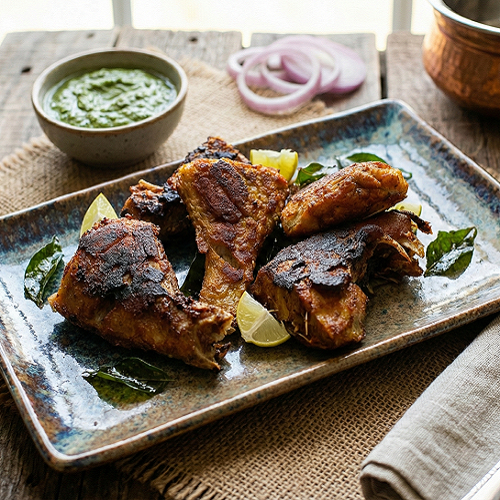
Laupatai Sarpunti Mach (Leaf-Wrapped Fish)
What can i say, we bengalies love to steam our fishes wrapped in different kind of leaves. NAd there is a really good reason for that. Your see steaming the fish in different leaves gives the fishes different flavours and each one is mount watering in its own way. And bonus your mix the steamed leaves with the rice to get that extra kick of flavours overall. The original recipe here used rohu fish but using Thai Sharpunti here will also make a grand dish.
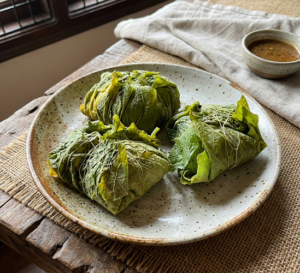 Ingredients: 8 pieces Thai sharpunti, 1 tsp garlic paste (for marinade), 2 tbsp lemon juice, salt to taste, pinch of sugar, 4 tbsp cooking oil, ½ cup onions (chopped), 1 bay leaf, 1 tbsp ginger paste, 4 tbsp onion paste, 1 cup yogurt, 1 tsp cumin powder, 2 cloves garlic (chopped), dried chili flakes to taste, and fresh pumpkin leaves.
Steps:
- Wash fish pieces, rub with salt, rinse well, and set aside. Marinate fish with garlic paste, lemon juice, salt, and a pinch of sugar for 1 hour.
- Heat oil in a pot and sauté chopped onions, bay leaf, and ginger paste. Add garlic paste and continue sautéing for 2-3 minutes.
- Add salt and onion paste, stirring well. Gradually add water while stirring to create a thick gravy, then mix in yogurt and cook on low heat.
- Place marinated fish pieces into the gravy, coating them well. Layer pumpkin leaves on top, cover, and steam for about 30 minutes until fish is cooked through.
- In a frying pan, heat oil and add cumin seeds, chopped garlic, chili flakes, salt, and sugar. Temper until fragrant.
- Add the steamed fish with pumpkin leaves to the pan and fry on both sides until well-browned and aromatic. Serve hot with steamed rice.
Follow Us: