Gojar: The Fish That Will Heal your Soul
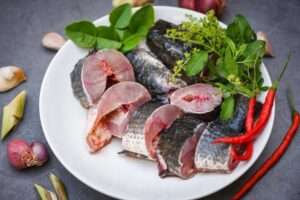
We Bengalis and our love for big fish goes a long way. It’s hard to describe this image to someone who isn’t Bengali. Imagine your father heading to the bajar local market where you can find fresh veggies, fish, meat and other food items) with his huge market bag. He comes back home with the bag in one hand, bursting with fresh produce. On his other hand, a huge fish will be swinging from a rope tied through its gills.
This may seem ridiculous to most people, but to us Bengalis, this is how every bajar session goes. Bengali fathers and their love for buying the biggest fish available in the market is never-ending. There’s something special about watching them searching for the perfect fish. The bigger, the better. Most of the time it will be some kind of carp, or boal, or the fish I’m going to write about today: Gojar.
Getting to Know Gojar Fish
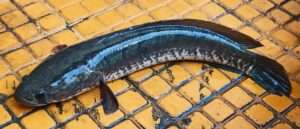
The Gojar or gozar fish, is known as the great snakehead in English or scientifically known as Channa marulius. It is a large freshwater fish native to South and Southeast Asia. This fish is widely consumed in South Asian countries like Bangladesh. In Bangladesh it is economically important for local fisheries and aquaculture. Adult great snakeheads are dark brown to blackish in color. They have distinctive large, bullseye-like blotches on both sides, often outlined in black. Young Gojar fishes are brightly colored, reddish-orange. They transition to greenish-brown or darker shades at approximately 5–7 cm in length. Their body is elongated and slightly cylindrical. They have a flat, snake-like head. Their mouth is wide with sharp teeth. They have large, and prominent scales. Their dorsal fin is long, containing 45–55 soft rays. Their anal fin has 28–36 soft rays. Their tail fin is rounded. Their upper body and sides are dark with faint speckles of black or yellowish-ochre.They have pale or whitish belly.
Nutritional Breakdown of Gojar fish per 100 gram
Gojar is a highly nutritious fish. However specific nutrient values can vary based on the variety and origin of the fish. Nutrient composition per 100 g of raw, edible parts for Gojar fish is as follows:
- Energy: 286 kJ
- Protein: 17.1 g
- Fat: 0.3 g
- Moisture: 82.6 g
- Ash: 1.0 g
- Iron: 0.43 mg
- Zinc: 0.60 mg
- Calcium: 9.3 mg
- Iodine: 14 µg
- Selenium: 37 µg
- Phosphorus: 150 mg
- Magnesium: 23 mg
- Sodium: 30 mg
- Potassium: 300 mg
- Manganese: 0.018 mg
- Sulphur: 230 mg
- Copper: 0.015 mg
- Vitamin B12: 0.55 µg
- Vitamin D3: 0.42 µg
- Vitamin E: 0.28 mg
- Folate: 2.0 µg
Healing properties and other benefits of consuming Gojar fish.
Studies have found some traditional uses of Snakehead in Southeast Asia. There it’s often recommended for people recovering from surgery or injury. It’s a great example of how food can be both nourishing and therapeutic. Here are the key findings from the study:
- High Albumin Content: Snakehead fish is exceptionally rich in albumin. This is a vital blood plasma protein. It helps to regulate fluid balance by pulling excess water from tissues back into circulation. This protein is essential for cellular repair and regeneration processes.
- Wound Healing: Snakehead is often recommended to people in recovery diets. For example, surgical patients, or people healing from injuries. The fishes high albumin content makes it important for would healing. It’s particularly popular in post-surgery meal plans across Singapore and Malaysia.
- Antioxidant Benefits: The albumin in Snakehead functions as a natural antioxidant. It works to combat damaging free radicals throughout the body. This helps minimize inflammation and promotes better overall wellness.
- Comprehensive Nutrition: apart from albumin snakehead also contains many other vital nutrients. All these nutrients strengthen immune function and enhance the body’s natural healing capabilities.
- Gentle Taste & Cooking Flexibility: Snakehead fish has a subtle flavor with a satisfying, firm texture. It works wonderfully in broths, stir-fried dishes, steamed preparations, or congee. This fish is an excellent choice for those transitioning to a pescatarian lifestyle.
Shol Fish vs Gojar Fish
Many people have a hard time identifying Shol and Gojar fishes apart. Mainly because Gozar fish (Channa marulius) and Shol fish (Channa striata) are very similar in appearance. However several key characteristics set them apart. Gozar fish displays distinctive white and black spotted patterns along its body. On the other hand, Shol fish has yellowish markings around the belly area.
Size-wise, Gozar fish achieves a larger maximum size compared to its Shol . Regarding physical characteristics, Shol fish reaches approximately one meter in length. It also features the distinctive serpentine head shape typical of snakeheads. Gozar fish, however, can exceed these dimensions considerably.
Both species offer excellent nutritional value and appealing taste. Shol fish particularly renowned for its impressive mineral density. Their habitat preferences also differ notably. Gozar fish primarily inhabits ponds, canals, wetland areas, and river systems. Shol fish demonstrates greater adaptability. It flourishes in diverse aquatic environments. Including rice paddies, drainage ditches, and smaller water reservoirs.
Gojar Fish Recipes
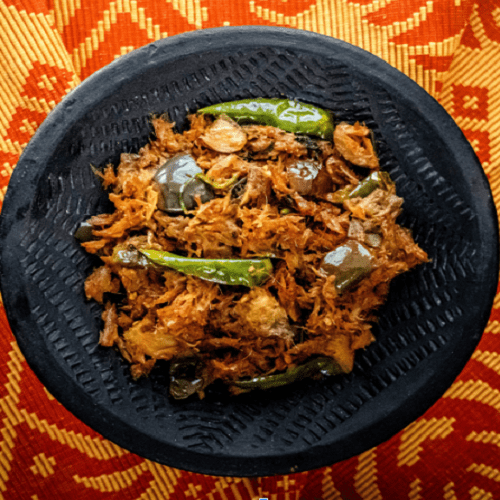
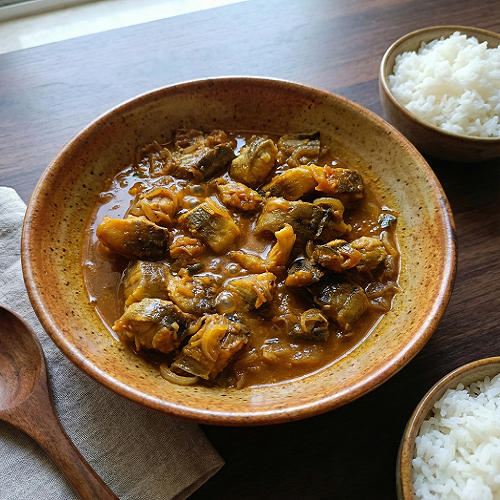
Gojar Fish Khakri Biran
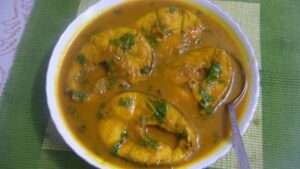 Khakri Biran is traditional Bangladeshi dish also known as Dopiaza. It is difficult to find fishes like gojar when you are living abroad. So you can replace gojar fish in this recipe with any other big fish available.
- To make Khakri Biran with Gojar fish, start by soaking fish fillets in mix of ice water and lemon juice.
- This will help the fish pieces to firm up. Next then cut you fish fillets into bite-sized pieces.
- Now season them with turmeric, red chili powder, and salt. Fry the seasoned fish in oil until golden and crispy, then set aside.
- In the same oil, caramelize sliced onions and green chilies. Add tomato, turmeric, coriander, red chili, and madras curry (optional) powder.
- Also add a splash of water to cook down into a rich base. Once the water reduces, and the oil comes up add the fried fish back in.
- Toss in extra cubed onions for texture.
- Cover briefly to let everything meld. Finish with fresh cilantro and green chilies for extra flair, serve hot with rice for a spicy, comforting Bengali meal.
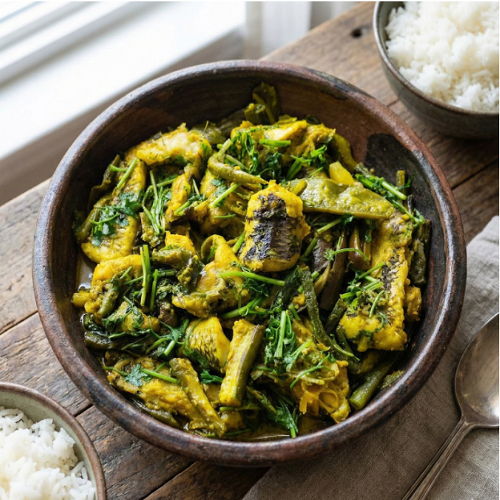
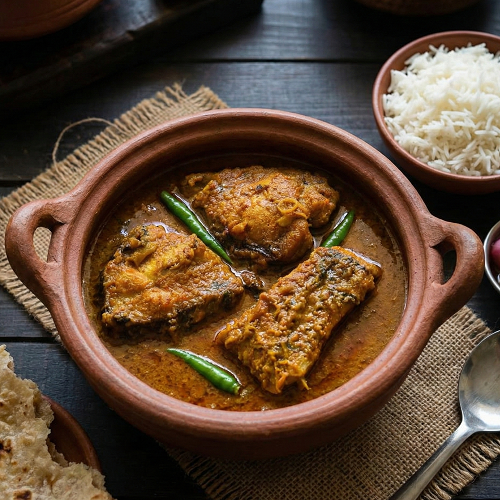
Gojar Fish-Lemon Leaf Curry
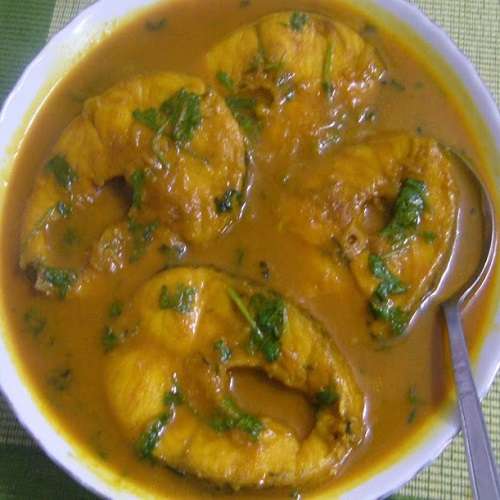
This a beautifully fragrant Bengali fish dish that will make you fall in love with gojar.
- To make this start by marinating the pieces of gojar fish with turmeric, chili powder, and salt.
- Then fry the fish in mustard oil alongside lightly salted potatoes. Keep both the frid fish and potatos aside.
- Then make a spice mix of turmeric, chili, cumin, and warm water. Add the mixture to the pan.
- Cook until the oil comes up. Now add the fish and potatoes. Crush one or two potato pieces and stir it in the gravy to make it thick.
- Let the mixture cook for a while, then add lemon leaves and simmer. Finish with a sprinkle of coriander-cumin-cinnamon powder.
Learn more about Fish Lemon Curry
Gojar fish (shutki) stir-fry.
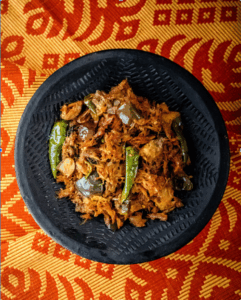 Start by chopping onions and green chilies.
- Then sautés them with ginger-garlic paste in a small amount of oil. Soften the onions by adding a pinch of salt.
- Next add turmeric, cumin, chili, and curry powder in the pan to create a rich base.
- Meanwhile, soak the dried Gojar fish in warm water for about ten minutes. Rinse thoroughly.
- Now add the fish to the sautéed spice mixture and mix well.
- Add a small amount of water and simmer on high heat for 5–6 minutes until flavors are fully absorbed.
- Finally, garnish with chopped coriander and serve hot, perfect with steamed rice.
Follow Us: