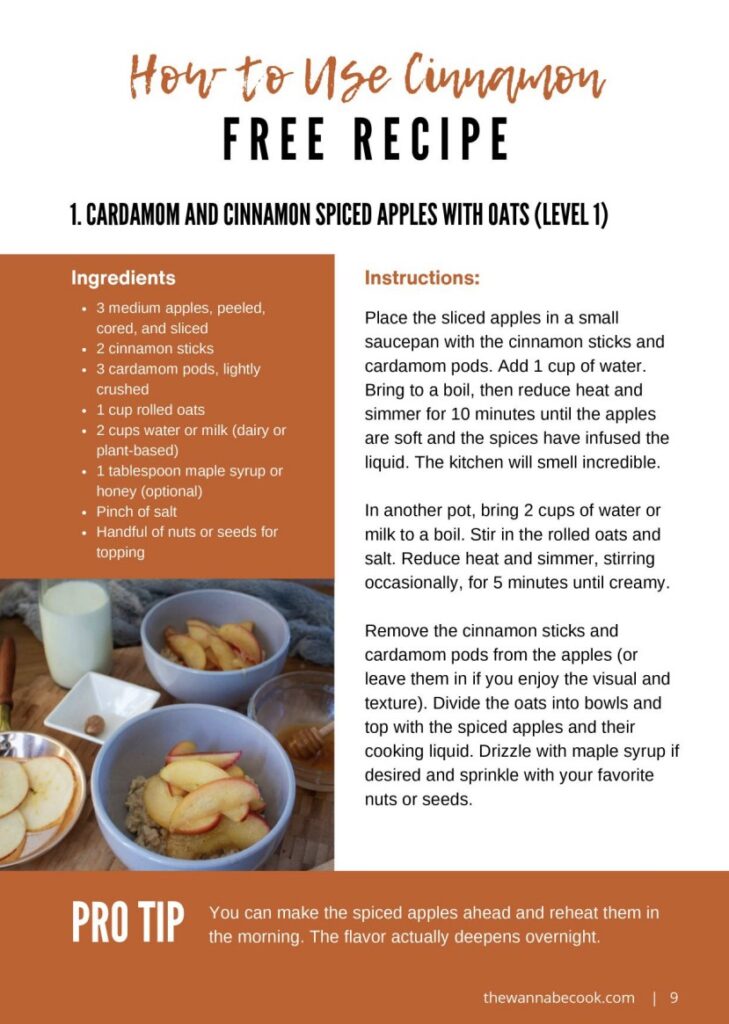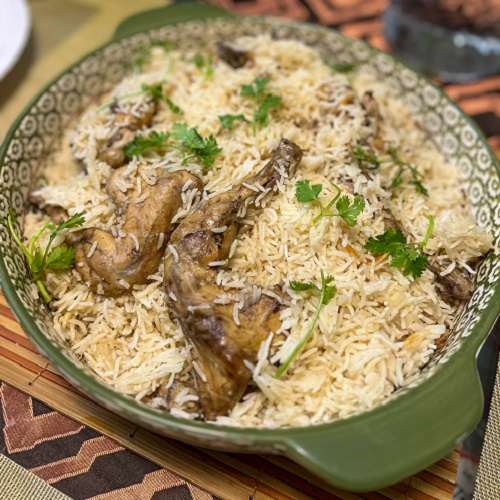
Chicken Pulao (Morog Pulao) Recipe
Whenever polao is being made in my house, my day is automatically happy. The smell flies in from the kitchen, of Polao er chaal (special polao rice, not necessarily basmati). The whole house has a different aura on polao days. I cannot wait for lunch time.
And polao doesn’t have to be made in my house for the smell to tickle my nostrils. Any neighbor could be cooking pulao and the whole neighborhood would be salivating.
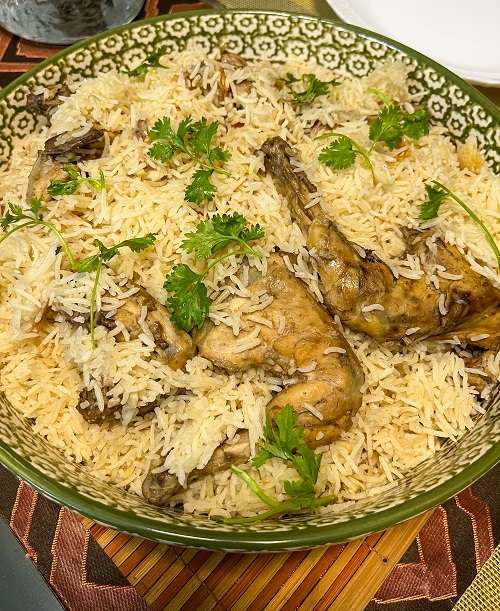
What is chicken pulao? It is a fragrant rice dish where chicken pieces are cooked together with basmati or pulao rice in one pot. The chicken is first fried with onions and cooked in a spiced yogurt gravy with aromatic spices like cardamom, cinnamon, and nutmeg. The rice is then cooked in this flavorful gravy along with milk.
What makes it special is the finishing touch, saffron-infused keora water, raisins, almonds, and pistachios, then steamed until every grain absorbs the essence of the spices and chicken.
Now people often think, what is the difference between chicken biryani and chicken pulao? The main difference is in the cooking method. Biryani uses the layering technique, you cook the rice and meat separately, then layer them together and steam. But with Polao everything cooks together in one pot. The rice and chicken are cooked in the same vessel, making it simpler and quicker than biryani.
The spicing is different too. Biryani tends to be more heavily spiced and richer (some might say more delicious), while pulao is more subtle and aromatic. Biryani often has that deep, complex flavor from marination and the dum (steam) cooking process. Pulao is lighter but still incredibly flavorful.
Is pulao better than biryani? Health-wise, polao is considered better because it has less fat and oil. The cooking process is gentler, and you do not need as much ghee or oil as biryani requires. So if you are watching your diet, polao is definitely the smarter choice. Thought to be honest neither is good for you if you are trying to diet, but I don’t blame you.
Chicken Pulao or Morog Pulao has fascinating history. It traces back to ancient Persia, where the word “pulao” (or pilaf) comes from. Persian nomadic cultures were cooking versions of this dish centuries ago. It was even documented by the Persian scholar Avicenna back in the 10th century! Can you imagine? People have been enjoying pulao for over a thousand years.
The dish then traveled to the Indian subcontinent under Mughal influence. The Mughals, who loved their elaborate feasts and rich cuisine, refined pulao and made it a festive dish. They added local spices, used fragrant basmati rice, and created the versions we know and love today. It is a beautiful example of cultural exchange through food.
In Bangladesh and Bengal, chicken pulao or morog pulao is a special occasion food. We make it for weddings, parties, religious celebrations like Eid, or when important guests visit. It is often served with chicken roast or korma, along with borhani (that spiced yogurt drink) and salad.
Ingredients
- 450 g 1 lb pulao rice or basmati rice
- 2 × 1¼ kg 2.5 lbs chickens, cut into pieces
- 1 cup finely chopped onion
- 2 tablespoons ground ginger
- 2 teaspoons ground garlic
- ½ teaspoon ground nutmeg
- ¼ teaspoon ground mace
- ⅛ teaspoon ground cloves
- ½ teaspoon ground cardamom
- ½ teaspoon ground cinnamon
- 1 cup yogurt
- 1 tablespoon lemon juice
- 1 tablespoon sugar
- 2 tablespoons raisins
- 2 tablespoons keora water
- ½ teaspoon saffron
- 2 tablespoons sliced almonds
- 2 tablespoons sliced pistachios
- ½ cup milk
- 1 cup ghee or butter oil
- Salt to taste
Instructions
- Soak ½ teaspoon of saffron in 2 tablespoons of keora water and set aside. Soak the sliced almonds and pistachios in water until soft, then drain.
- Remove the skin from the chicken and cut each chicken into four pieces. Heat 1 cup of ghee or butter oil in a large pot over medium heat. Add the finely chopped onions and sauté until they turn light brown.
- Add the chicken pieces to the pot and fry until lightly browned. In a bowl, beat the yogurt and mix in all the ground spices along with salt. Add this mixture to the chicken and cook over moderate heat, stirring occasionally, until the gravy thickens and oil separates from the mixture. Then add the lemon juice and sugar and mix well.
- Once the gravy is ready, remove as much oil as possible and set it aside. Transfer the chicken pieces out of the gravy and keep them separately.
- Rinse the rice thoroughly and drain the water. In a deep saucepan, add the reserved oil, the rice, salt, the chicken gravy, ½ cup milk, and 2½–3 cups of water. Bring the mixture to a boil. Stir well, then cover and simmer over low heat for 20–25 minutes. Remove from heat once the rice is cooked.
- Take out half of the cooked rice and set aside. Arrange the chicken pieces over the remaining rice in the pot. Sprinkle some keora water, raisins, almonds, and pistachios over the chicken. Cover with the reserved half portion of rice. Sprinkle the remaining keora water, along with the rest of the raisins, almonds, and pistachios, on top.
- Cover the pot tightly and cook over very low heat for 20–25 minutes, or place the covered pot in a 150°C (300°F) oven for the same duration to allow the flavors to blend and the pulao to steam properly.
- Serve hot with borhani, salad, or shami kebab.