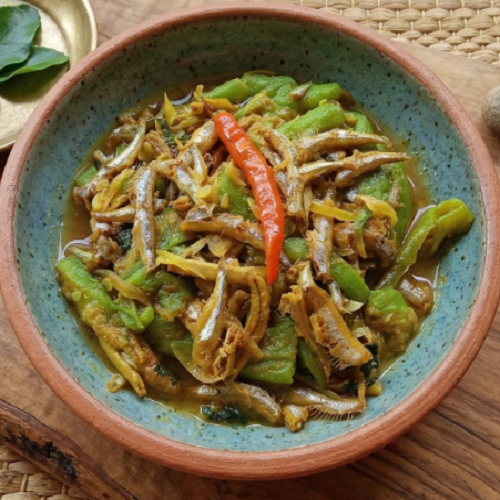
Chela: Affordable and Often Overlooked
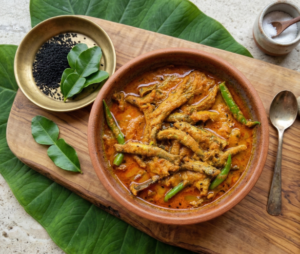 If you try to imagine Bangladeshi fish, chances are you’ll picture the big ones first. Of course, our hilsha is famous — and rightfully so. The Bangladeshi ilish from the Padma river has a taste that’s truly incomparable. But while the big fish take the spotlight, small indigenous fish have been quietly doing their part for generations.
Affordable and often overlooked, they feed people across all walks of life. And nutritionally, they often punch well above their weight — sometimes outperforming larger, fleshier fish like rohu or hilsha. They’ve been nourishing children and women from behind the scenes for as long as anyone can remember. It’s about time they got a little more appreciation.
I’ll admit — as a child, I was always a picky eater when it came to fish. I’d only go for a select few bigger fish with bones that were easy to pick around. Eating small fish whole, with their slightly prickly texture from chewing through tiny bones, just didn’t appeal to me back then. But the more I’ve grown, and especially living abroad where most of those small fish are simply out of reach, I find myself relying on meat for protein and genuinely missing choto mach — the small fish from home.
This blog is dedicated to one of those fish I’ve been feeling nostalgic about: Chela fish.
What is Chela fish?
Chela is a genus of small freshwater fish from South Asia that are closely related to Laubuka. The genus was established by Francis Buchanan-Hamilton in 1822, with Chela cachius designated as the type species. It belongs to the family Cyprinidae, subfamily Danioninae. The name “Chela” derives from a local Bengali vernacular name for these small cyprinid fishes. The genus comprises three recognized species: Chela cachius, Chela khujairokensis, and Chela macrolepis. These fish are found across South Asia, including India, Bangladesh, Nepal, Pakistan, and Myanmar, primarily in the Ganges-Brahmaputra basin and surrounding river systems.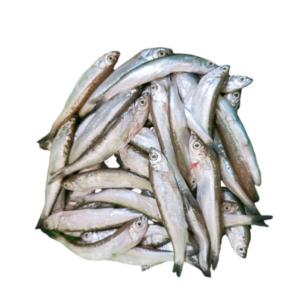
Identifying Chela Fish
Chela fish are small, flat-bodied fish with a hatchet-like shape and a shiny silver color. Their backs are darker grey, with a faint green stripe along the side and a whitish belly. They have no barbels and a slightly keeled (ridged) belly, which suits their surface-dwelling lifestyle. Like hatchetfish, they can jump out of open tanks when startled.
Most adults grow between 4 to 6 cm, though they can reach up to 11 cm. They live in a variety of freshwater habitats, including streams, ponds, canals, ditches, and flooded rice fields. They are especially common during the rainy season.
Nutritional Composition per 100g:
- Moisture: 68.12 ± 0.06%
- Protein: 14.86 ± 0.04%
- Fat: 11.09 ± 0.07%
- Ash: 5.59 ± 0.02%
- Carbohydrate: 0.33 ± 0.04%
- Calcium (Ca): 807 ± 0.02 mg
- Phosphorus (P): 2470 ± 0.02 mg
- Iron (Fe): 3.90 ± 0.02 mg
- Zinc (Zn): 3.18 ± 0.02 mg
- Vitamin A: 378.96 ± 0.03 μg
- L-histidine (essential amino acid): 8.36 ± 0.05 g
- Palmitic acid: 4.49 ± 0.01 g
- Oleic acid: 1.94 ± 0.03 g
- Stearic acid: 1.43 ± 0.02 g
Health Benefits of Consuming Chela Fish
Like other small indigenous fish, Chela is eaten whole with bones intact, giving you all the calcium and minerals that would be lost otherwise.
Exceptionally High in Phosphorus: Chela fish contains an impressive amount of phosphorus per 100 grams, making it one of the richest sources among small indigenous fish. Phosphorus works with calcium to build strong bones and teeth, and plays a crucial role in how your body uses carbohydrates and fats. It’s also essential for protein synthesis and cell repair.
Rich in Calcium: Chela provides substantial calcium when eaten whole with its bones. This calcium maintains bone and tooth strength, which becomes more important with age. Children, pregnant women, and nursing mothers need it for proper development and milk production.
Good Source of Vitamin A: The fish provides a good amount of vitamin A which is important for vision, immune function, and cell growth. This addresses vitamin A deficiency, which is a concern in many communities.
Essential Amino Acids: Chela contains a fair amount of L-histidine, an essential amino acid that your body cannot produce on its own. L-histidine is important for growth, tissue repair, and the production of blood cells.
Healthy Fats: The fish contains beneficial fatty acids, including palmitic acid, oleic acid, and stearic acid. These support various bodily functions and provide energy.
Fighting Anemia: The iron and zinc content in Chela, along with other nutrients, help address anemia. The iron is particularly important for producing hemoglobin, while zinc supports immune function and wound healing.
Bengali Recipes with Chela Fish
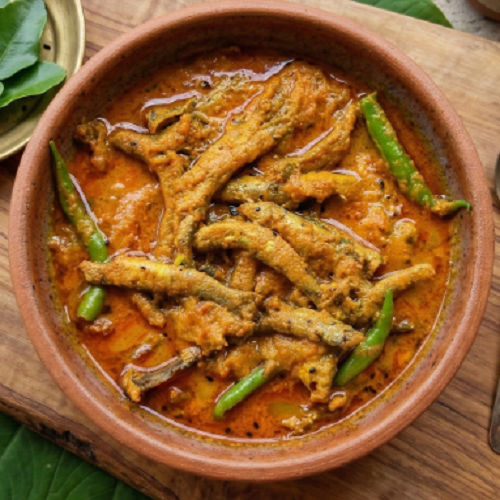
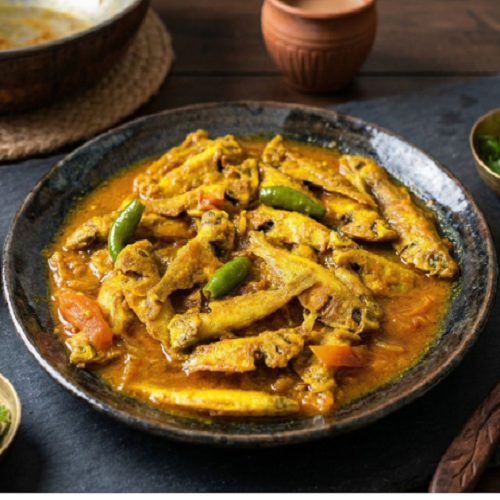
Chela Fish Curry
Inspired by our Wannabecook’s chapila fish curry recipe, this simple Bengali fish curry with tons of vegetables simmered in a lightly spiced broth will bring the authentic Bengali comfort to you. Best enjoyed with steaming hot rice.
Ingredients: 250g chela fish, 1 medium aubergine, 2 medium potatoes, 1 medium tomato, 1/2 cup chopped onion, 1 tbsp turmeric powder, 1 tbsp red chili powder, 1/3 cup mustard oil, salt to taste, 3/4 green chili, coriander leaves to garnish.
Instructions:
- Clean the vegetables and cut them into medium-sized pieces.
- Clean the chela fish thoroughly, 2-3 times.
- In a bowl, combine the fish, potato, aubergine, onion, mustard oil, salt, turmeric powder, and red chili powder. Mix well.
- Heat a pan and add the entire mixture.
- Cover with a lid and cook on medium flame for 20-25 minutes.
- Add green chili and coriander leaves and cook for a further 5 minutes.
- Serve with steaming white rice.
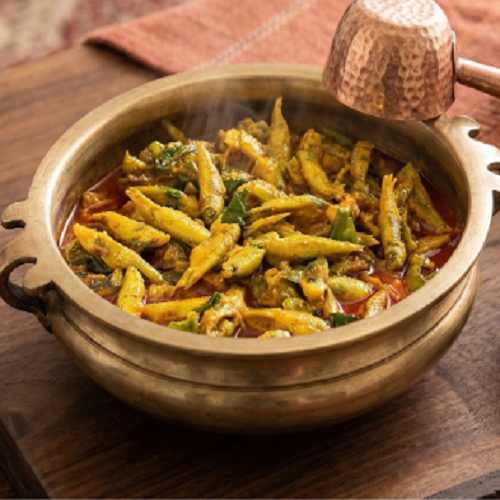
Small Chela Fish with Sponge Gourd
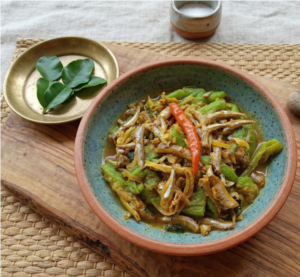 This is a very low-effort, quick-cooking method that can be done by anybody. So this is actually perfect for us wannabcooks :). The recipe requires assembling all the ingredients first and then cooking them together. It’s perfect for busy days when you want a nutritious meal without spending too much time or fuel.
Ingredients: 250g small Chela fish (cleaned), 1 sponge gourd (peeled and sliced), 1 onion (chopped), 2-3 green chilies (slit), fresh coriander leaves (chopped), 1 tsp turmeric powder, 1 tsp red chili powder, 1 tsp coriander powder, 1 tbsp ginger-garlic paste, salt to taste, mustard oil as needed, little water.
Instructions:
- In a pan, put oil and add the chopped onions, the dry spice powders (turmeric, red chili, coriander), and the ginger-garlic paste. Mix well with your hand. Do not put it on the stove or turn on the heat yet.
- Add the sponge gourd slices and spread them evenly over the spices.
- Add the cleaned small fish on top.
- Add green chilies and coriander leaves.
- Sprinkle a little water over everything and mix all ingredients gently.
- Now place the pan on the stove, turn on the heat, and cover with a lid.
- Cook until the water dries and the sponge gourd and fish are fully cooked.
- Check if it is done; the fish should be cooked through, and the sponge gourd should be tender.
- Serve hot with rice.
FAQ’s
Are Chela fish good to eat?
Absolutely. Chela, along with other small fish like Mola and Punti, is packed with Vitamin A, iron, and calcium. They’re especially good for young children, providing key nutrients during those crucial early years of growth. They’re often cooked with vegetables or made into fish cutlets and fish powder to make them easier for kids to eat.
What is Chela fish?
Chela is a group of small, silver-bodied freshwater fish found across South Asia. The most common species is Chela cachius, and they’ve long been a staple in local diets as one of the region’s well-known small indigenous fish.
What fish are similar to Chela?
Chela are closely related to Giant Danios and Dwarf Rasboras. They’re also part of a smaller group that includes Neochela and Laubuka. One thing that sets them apart is their slightly deep, rounded belly, similar to the Amazonian Hatchetfish, which is especially noticeable in the Orange Hatchet Danio (Chela dadiburjori).

Follow Us: