Tara Baim (Lesser Spiny Eel)
I know most Bengalis living abroad miss the abundant variety of fish we have back home. In Bangladesh, we have access to so many fish species that other countries simply don’t have. Sure, you can get some varieties abroad—mostly the big, well-known ones like sushi or hilsha. But small indigenous fishes? Not so easily available. Especially the ones that aren’t well-known internationally.
This might happen for several reasons—lack of information about these fishes, seasonal availability, limited supply, or maybe issues with proper storage and transportation. I don’t really know the actual cause, but whatever the reason is, people are clearly missing out. Because these small indigenous species (SIS) are actually really nutritious and good for your health. Not to mention they taste really good too! So yes, we Bengalis aren’t just missing the taste of these amazing fishes—we’re missing out on the health benefits too. And all that at a very reasonable price point.
One such fish is Kuli, or Bhut Bailla.
What is Kuli, Bhut Bailla?
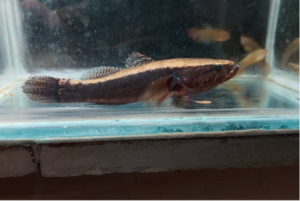 Known locally as “Kuli” or “Bhut Bailla” in Bangladesh, this small fish (scientifically called Eleotris fusca or Dusky Sleeper) has been a staple in the Khulna district for generations. It shouldn’t be confused with the tank goby or bele fish. These adaptable fish thrive in shallow waters up to 5 meters deep, preferring mud bottoms in streams, canals, ponds, and flooded rice fields. They’re especially abundant during Bangladesh’s rainy season.
Identification and Characteristics
The Kuli is a slender fish that grows up to 26 centimeters long. It has dark brown to black coloring with horizontal stripes along its body. Young Kuli fish have spotted fins that fade as they age. This species can be identified by a small spine near its gill cover and 57-68 scales along each side. Female Kuli fish are devoted parents. They lay eggs on submerged plants with small leaves, then tend to and fan the eggs until hatching. After the hatchlings come out, the mother loosely guards them for several days.
Nutrition Per 100 grams
Here’s what you get per 100 grams of raw, edible fish:
- Energy: 330 kJ
- Protein: 16.9-17.5g
- Fat: 1.2g
- Calcium: 444mg
- Iron: 0.785mg
- Zinc: 1.86mg
- Vitamin A: 29.2μg
- Omega-3: 0.137g
- Selenium: 59.5μg
Why Kuli Fish Matters for Public Health in Bangladesh
In Bangladesh and other low-income countries, the Kuli fish plays a crucial role in fighting malnutrition, particularly iron deficiency.
The Iron Deficiency Crisis
Iron deficiency affects up to 40% of people worldwide, and 1.6-2 billion people suffer from anemia. The impact goes beyond fatigue — it impairs thinking, reduces work capacity, and hurts economic productivity. About half of all cases are caused by poor diet or the body’s inability to absorb iron properly.
Why Fish is a Better Source of Iron
Small fish such as Kuli or Dusky Sleeper provide haem iron, which the body absorbs much more efficiently than plant-based iron. While iron received from plants has only a 2-20% absorption rate, haem iron received from fish gets absorbed at 15-35%. The reason is simple: haem iron enters the body as a complete molecule, while plant iron must be broken down and converted first.
Traditional Consumption
In Bangladesh, small fish like the Kuli are typically eaten whole — head, bones, organs, and all. This provides maximum nutrition: calcium from bones, iron from organs, and vitamin A from the liver. These fish are especially vital for low-income communities who cannot afford expensive nutrient sources and rely on affordable local foods. They provide essential nutrients often missing from plant-based diets.
Sustainable and Resilient
The Kuli and similar small fish are highly sustainable. They breed quickly and abundantly with little to no management needed. These hardy fish thrive in diverse water bodies — wetlands, ponds, irrigation channels, and even abandoned pools. This adaptability makes them a reliable food source that improves nutrition for rural communities.
Bengali Recipe with Dusky Sleeper (Kuli, Bhut Bailla)
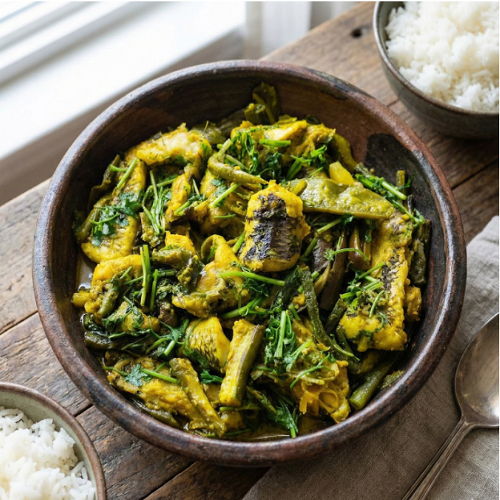
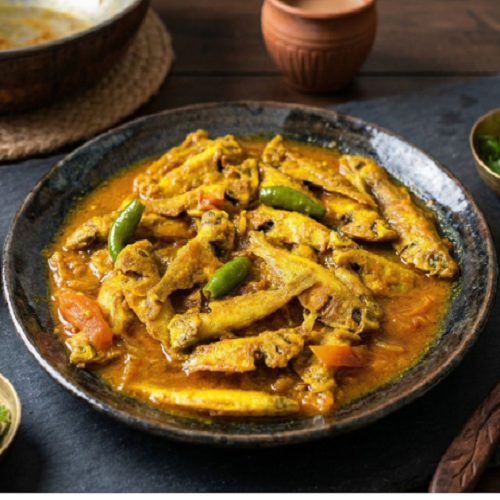
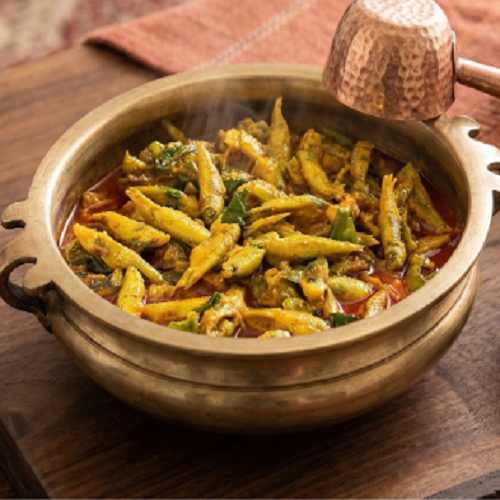
Fish Curry with Vegetables (Sobji diye Macher Jhol)
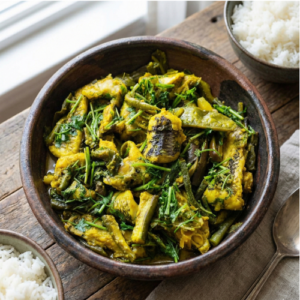 Fish curry with vegetables, locally called “Sobji diye macher jhol,” is a cozy and comforting Bengali classic. It is a perfect one-pot dish that combines the protein of fresh fish with the nourishment of seasonal vegetables in a light, healthy broth. This recipe is very versatile, meaning you can use whatever vegetables you have on hand—such as potatoes, eggplant, or long beans—making it an ideal wholesome dinner to serve with steaming hot rice. The original recipe uses baila fish but you can substitute it with Kuli or Bhut Bailla.
Ingredients: 500g fish (any medium or large variety like Bhut Bailla), 750g mixed vegetables (seasonal choices like potato, long beans, or eggplant, cut into pieces), ¼ cup mustard oil, ½ cup onion (finely chopped), ½ tsp ginger paste, ½ tsp garlic paste, ½ tsp turmeric powder, 1 tsp red chili powder, ½ tsp coriander powder, 3-4 green chilies, salt (to taste), 1 cup water (plus ¼ cup warm water for spices), and ½ cup fresh coriander leaves (chopped, for garnish).
Steps:
- Heat the mustard oil in a pan and add the finely chopped onion. Fry until the onions turn golden brown.
- Add the garlic paste, ginger paste, turmeric powder, and red chili powder. Pour in ¼ cup of warm water and cook the mixture for 5 minutes to remove the raw smell of the spices.
- Add the chopped vegetables to the pan and stir well to coat them in the spices.
- Cook the vegetables for 10 minutes, then gently add the fish pieces to the pan.
- Add salt to taste and pour in the boiled water (approx. 1 cup) to create the gravy.
- Cover the pan with a lid and let it simmer for 15-20 minutes until both the fish and vegetables are tender.
- Add the green chilies and the coriander powder to the curry, stirring gently.
- Garnish with fresh chopped coriander leaves and serve hot.
FAQ:
Are Murbaila, Bhut Bailla, and Bele fish all from the same family?
No. Despite similar names, they’re from different families. Common Bele (Gobiidae) has fused fins forming a suction cup. Bhut Bailla (Eleotridae) has separated fins. Murbaila (Platycephalidae) is a marine fish with a flattened head.
Is Bhut Bailla considered a Small Indigenous Species (SIS)?
Yes, Bhut Bailla is classified as SIS. These are fish that grow to a maximum of about 25 cm at maturity, making them a valuable source of affordable nutrition.
What are the nutritional benefits of eating Bhut Bailla?
It’s exceptionally high in Zinc and Selenium. When eaten whole with head and bones, it provides rich amounts of Calcium, Iron, and Vitamin A that you don’t get from just eating fish fillets.
Where is Bhut Bailla usually found?
This bottom-dweller thrives in muddy environments—freshwater ponds, rivers, and brackish estuaries where the river meets the sea.
How does it differ from large fish nutritionally?
Large fish provide excellent protein but are eaten without bones. Small fish eaten whole deliver significantly higher amounts of minerals like Calcium and Iron, making them “superfoods” for preventing malnutrition.



Follow Us: