Tara Baim (Lesser Spiny Eel)
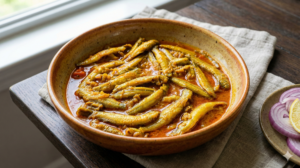 I may have mentioned my distaste for Baim (eel) fish in a previous blog post—something about the way it looks and how most people cook it just doesn’t sit right with me. But this tiny little baim fish? It’s always been an exception to that rule. Why? I hadn’t given it much thought before, but now that I’m writing about Tara Baim and educating myself on this fish, I’ve come to a few realizations behind that exception.
First, it’s the fish’s size. Tara Baim is quite small compared to most fish, and that makes it taste quite different, even though it belongs to the same family as Baim. Second, it’s the way it’s cooked. This fish is usually prepared with lots of vegetables because it’s considered a chotomach (small fish), and cooking small fish with plenty of veggies is quite common in Bangladesh. That really balances out the flavor—not that it’s a bad-tasting fish, I’m just talking about my own preferences here!
And since we’re talking about chotomach, here’s something interesting: Tara Baim is actually one of the most impactful fish species in Bangladesh because it’s considered a SIS (Small Indigenous Species). Bangladesh is one of the most significant inland fishing countries in the world, with water bodies home to more than 150 SIS out of 251 different inland fish species. But more on that later—let’s just get to know Tara Baim fish first!
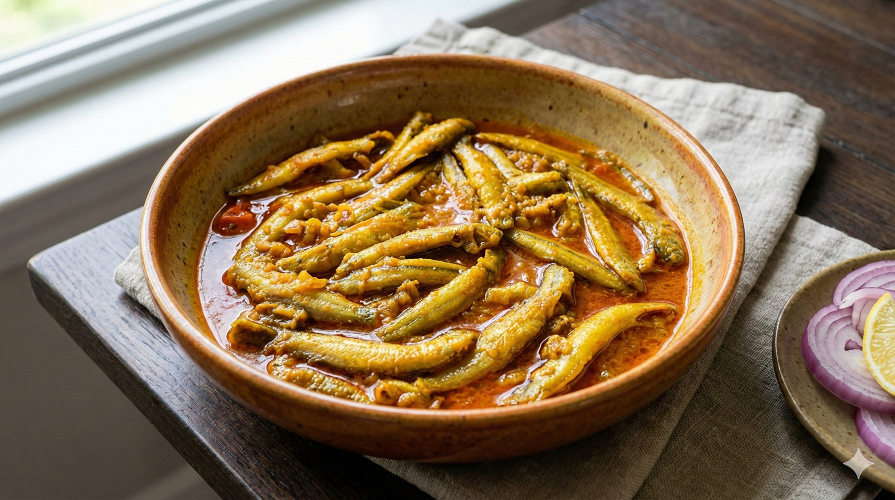
Tara Baim (Macrognathus aculeatus), commonly known as Lesser Spiny Eel, is a native freshwater fish found throughout Bangladesh and across South and Southeast Asia. Despite its name, it’s not a true eel but belongs to the spiny eel family (Mastacembelidae). This fascinating fish thrives in muddy streams, canals, beels, ponds, and flooded fields, especially during the rainy season. It can grow up to 37.6 cm long and breeds during the monsoon months.
One Fish Many Confusing Names
The word “tara” means star in Bengali, which might lead you to think this fish is somehow related to starfish—but it’s not! Tara Baim is a purely freshwater fish. Another common mix-up: many people call it “Guchi fish,” but true Guchi fish don’t have Tara Baim’s distinctive spotted pattern. The biggest confusion, though, is with its larger cousin, Baim (Mastacembelus armatus), the zig-zag eel. While both belong to the spiny eel family, Baim can grow up to 90 cm (some say even 2 meters!) and sports striking zig-zag or tire-track patterns, whereas Tara Baim stays smaller at around 37.6 cm with 3-7 black spots along its dorsal fin. We have another blog post dedicated to Baim or zig-zag ee, which you can read here.
Identification and Physical Characteristics
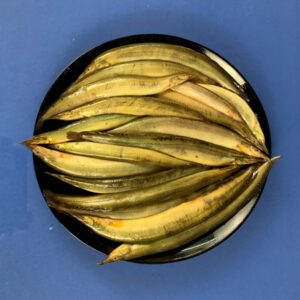 The Tara Baim has a long, flat body that is easy to spot. Its back is green or brown-gray, fading to a yellow belly. Its key feature is a row of 3–7 black spots with white rims along its top fin. Near the tail, these spots sit inside red, orange, or white rings. It also has small eyes, a three-part snout, no belly fins, and a small, round tail. The scales on its head are larger than on its body, and the top and bottom fins do not connect to the tail.
Habitat and Behavior
Tara Baim mainly lives in still or slow-moving freshwater bodies with muddy bottoms, such as canals, ponds, wetlands, and flooded fields. It main food source is algae, mud, and sand.
They breed during the rainy season when water levels rise. In areas like Chalon Bill, a special type of fishing gear locally known as “dohair” is used to catch them.
Conservation Status and Threats
Tara Baim is currently listed as Near Threatened (NT) in Bangladesh according to the IUCN Red List criteria (Version 3.1), meaning its population is declining and requires attention. The species has not been assessed globally yet. Like many native fish species, Tara Baim faces threats from over-harvesting, habitat destruction, indiscriminate fishing of small and fertile fish, and loss of breeding grounds. Sustainable fishing practices and choosing fully grown fish can help protect this species for future generations.
Economic Importance
Tara Baim is highly esteemed as food and has high market value, with prices ranging between 130-160 Tk/kg. This fish is not just a food source; it can also be kept as a hobby fish in aquariums. Tara baim can also be farmed in ponds, making it economically versatile.
Small Indigenous Fish Species (SIS) and their Health Benefits
Tara Baim is classified as a Small Indigenous Fish Species (SIS). According to scientists, fish that can grow to 25 cm or 9 inches at the mature or adult life cycle stage are known as SIS, though some species can grow slightly larger. SIS are an essential source of nutrition for many communities worldwide. When micronutrient deficiency is a major issue, SIS play a crucial function in supplying these vital nutrients. Most small fish are consumed whole, including the head, organs, and bones, providing calcium, vitamin A, iron, and zinc to underprivileged communities.
Nutrient Composition of Tara Baim (per 100g raw edible parts)
- Calories: 92 kcal (387 kJ)
- Protein: 17.2g
- Fat: 2.6g
- Moisture: 79.4g
- Ash: 2.3g
- Calcium: 457mg
- Phosphorus: 560mg (estimated from dry matter data)
- Potassium: 290mg
- Iron: 2.5mg
- Magnesium: 34mg
- Sodium: 46mg
- Zinc: 1.2mg
- Selenium: 15μg
- Iodine: 13μg
- Vitamin A: 83μg
- Vitamin B12: 5.20μg
- Vitamin E (α-tocopherol): 0.17μg
- β-Carotene: 135μg
Health Benefits
Tara Baim offers numerous health benefits due to its rich nutritional content. According to nutritionists, this fish contains choline, an essential nutrient that aids in DNA synthesis, supports the nervous system, and assists in fat metabolism and transport. The fish is also full of calcium, zinc, sodium, potassium, iron, and other essential minerals. Since the whole body of SIS is edible—including the head, bones, eyes, and viscera—there’s no plate waste, and consumers benefit from all the nutrients this fish has to offer.
Bengali Recipes with Tara Baim
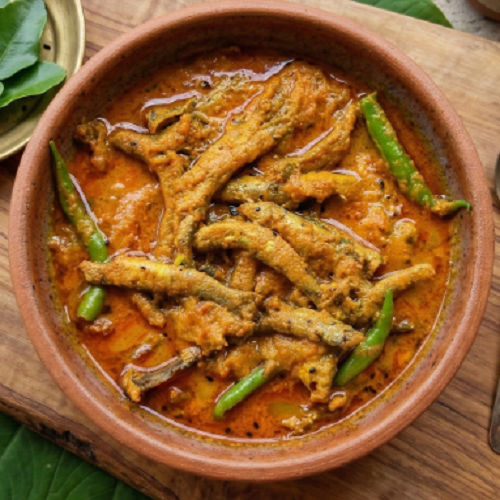
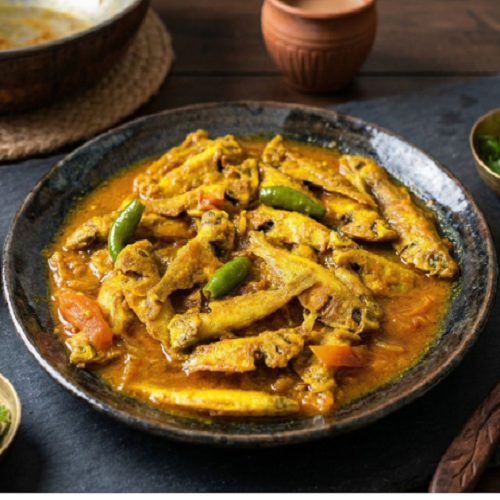
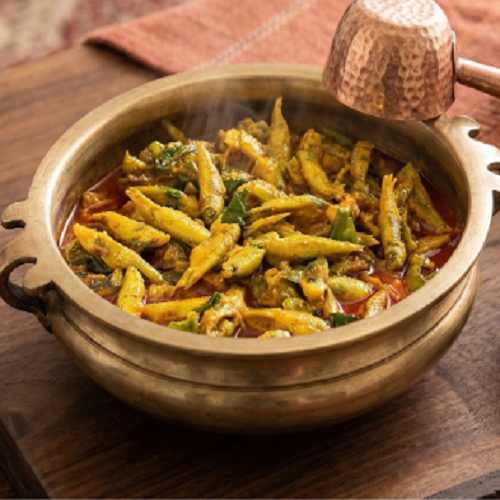
Tara Baim with Radish and Eggplant Bhaji
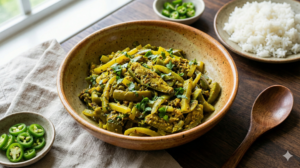 I’ve been preaching this for a long time, and I’ll say it again: small fish and vegetables are simply made for each other. Here’s a traditional recipe that’s healthy, nutritious, comforting, and delicious. It’s easy to prepare, so any newbie—or as we like to say, any Wannabecook—can try it without breaking a sweat. Serve this bhaji with steamed rice for a complete meal.
Ingredients:
- 1/2 kg Tara Baim fish
- 2-4 radishes (cut into small pieces)
- 5-6 medium-sized eggplants (cut into pieces)
- 1 tablespoon chopped coriander leaves
- 1 tablespoon chopped onions
- 1 tablespoon chopped ginger-garlic
- 1/2 teaspoon turmeric powder
- 1/2 teaspoon chili powder
- 1/2 teaspoon cumin powder
- 2 tablespoons oil
- Salt to taste
- Additional oil as needed
Steps:
- Wash the radishes and eggplants thoroughly and cut them into small pieces. Set aside.
- Heat oil in a pan and sauté the chopped onions along with the ginger-garlic paste until fragrant and golden.
- Once the onions, ginger, and garlic are well-fried, add the radish and eggplant pieces. Add a little salt and oil as needed, and mix well.
- Add the chili powder, turmeric powder, and cumin powder, mixing thoroughly to coat the vegetables with the spices.
- Add the Tara Baim fish to the pan and cook everything together, allowing the flavors to meld.
- Once the vegetables are cooked and the fish is tender, transfer to a serving plate and garnish with chopped coriander leaves. The garnish is optional but really recommended if you want that extra boost of flavours.
- Add the fish pieces to the cooked spices along with a little water and salt to taste. Cook the fish well, stirring occasionally.
- Once the fish is well-cooked with the spices, add enough water to simmer the fish until tender.
- Mix the powdered milk with water and add it to the cooked fish. Keep on the stove for a few more minutes.
- When you see oil floating on top, remove from heat. Serve hot with steamed rice. To enhance the presentation, you can garnish with fresh coriander leaves with stems.
Tara Baim Fish in Coconut Milk
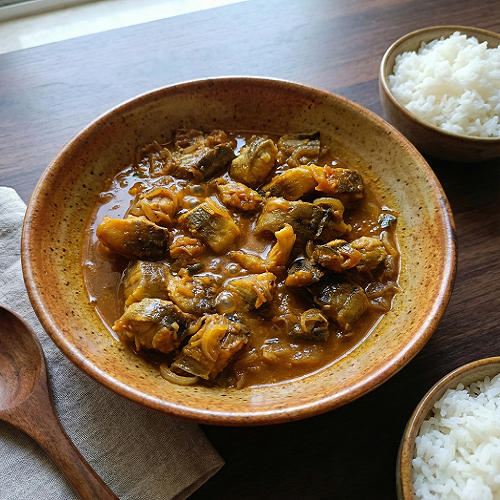
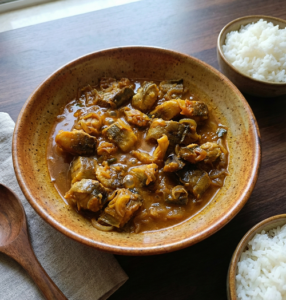 Tara Baim fish in coconut milk is one of the best ways to enjoy this wonderful fish. The creamy coconut sauce paired with the small, flavorful fish is perfect with a side of steamed rice. The original recipe was made with Bain fish but replacing it with tara baim is perfectly alright.
Ingredients: ½ kg processed bain fish (cut into small pieces), ½ cup soybean oil, 1 cup onion (chopped), ½ tbsp ginger paste, ½ tbsp garlic paste, 1 tsp chili powder, 1 tsp turmeric powder, 1 tsp cumin powder, 2 bay leaves, 1 cinnamon stick, 1 cup coconut milk, 5-6 green chilies, and salt (to taste).
Steps:
- Turn on the stove and heat a pan. Pour the oil into the pan.
- Add the chopped onion, cinnamon stick, and bay leaves. Cook until the onions turn golden brown.
- Add the garlic paste and ginger paste and cook for a short while to remove the raw smell.
- Add the chili powder, turmeric powder, and cumin powder along with ½ cup of the coconut milk. Cook this mixture for 3-4 minutes over medium heat.
- When the oil begins to separate and float above the coconut milk mixture, gently add the fish pieces.
- Cook the fish for 5 minutes, then add the remaining coconut milk and the green chilies. Add salt according to your taste.
- Simmer on medium heat for 20-25 minutes until the fish is fully cooked and the gravy reaches your desired consistency.
- Transfer to a bowl and garnish with your favorite toppings before serving.




Follow Us: