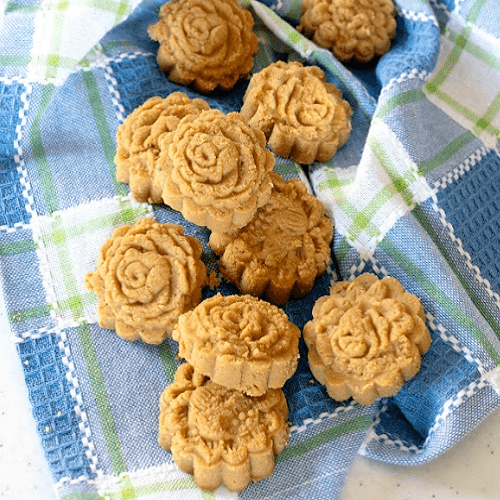
Sondesh/Sandesh – A Traditional Bengali Sweet Recipe
If you look up the word “sondesh” in a Bengali-English dictionary, you will find it translated as “confectionery.” But that translation is completely inaccurate. Confectionery refers to sweets and chocolates considered collectively, a whole category of treats. But Sondesh stands alone. Sondesh can mean a whole line up of unique sweets, or just a single piece of delicious dessert.
What is sondesh made of? That depends on which type you are talking about, because there are many varieties. But generally, sandesh is made with chhena, sugar, and sometimes flavoring like cardamom or saffron. Some versions use maida and condensed milk for extra creaminess.
Sondesh is one of my absolute favorites. I love roshogolla, do not get me wrong, but sondesh has a special place in my heart. It is usually less sweet than other Bengali sweets like roshogolla or gulab jamun. This makes it perfect for people like me, and many others, who want something sweet but not overpoweringly so. The texture is different too, this delicate flavor that does not assault your taste buds or give a sugar rush.
Here is a fun fact for you. What is the meaning of sondesh? In Bengali, “sondesh” also means news. And not necessarily sweet news either, just regular news.
Though Shandesh is rarely used in Bangladesh to mean news. So when someone says “ki sondesh?” they are not asking “what’s the news?”, rather they want to know what sweet are you eating.
The history of sondesh is fascinating. A sweet called sandesh is mentioned in medieval Bengali literature, including Krittibas’ Ramayana and even in the lyrics of Chaitanya Mahaprabhu. But here is the interesting part, that original sandesh was probably not the chhena-based sweet we know today. Historians believe it was made from solidified kheer, which is completely different.
So when did sondesh become the chhena-based sweet we love now? That likely happened after the Portuguese influenced cheese-making in India. By the second half of the 19th century, sandesh commonly referred to the chhena-based version. One of the most famous sweet shops in Kolkata, Bhim Chandra Nag, was set up in 1826 at Bowbazar and became famous for its sandesh. That shop is still running and an important part of Bengali heritage.
They are not the only old Shandesh shops. Sondesh making is a business for generations. The are family recipes passed down through the decades, with each generation perfecting the technique. This is especially common in Kolkata and parts of old Dhaka, where you will find sweet shops that have been running for over a hundred years.
Sondesh is incredibly popular as proshad – that is a religious offering – for many pujas or Hindu celebrations. During Durga Puja, Kali Puja, or any other festival, you will see plates and plates of sondesh being offered to the deities. After the prayers, the proshad
is distributed among everyone, and trust me, the sondesh disappears the fastest.
Basirhat is famous for its Kachagolla Sandesh, a tradition that is apparently 400 years old! And the Gupo style of sandesh from Guptipara is considered by some to be the “first branded sweet of Bengal.”
Making sondesh at home is not as difficult as making roshogolla, but it still requires skill. The key is in kneading the chhena properly. Knead too little and your sondesh will be grainy. Knead too much and it becomes too soft and loses its shape. You need to find that perfect balance.
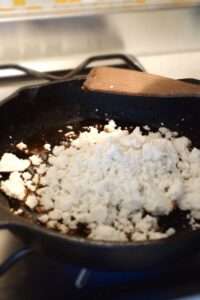
The cooking process is also crucial. You cook the chhena with sugar over low heat, stirring constantly until it comes together. The mixture should pull away from the sides of the pan but still be moist. If you overcook it, your sondesh will be hard and dry.
Ingredients
- 3 oz 75 g molasses or patali gur (date palm jaggery), crumbled
- ¼ cup 50 g sugar
- 2 cups chhana
Instructions
- Smash the molasses (or patali gur) into small pieces for easier melting.
- In a non-stick or heavy-bottomed pan, melt the molasses over low heat, stirring constantly.
- Once it starts to dissolve, add the sugar and mix well. Gently stir in the chhana.
- Cook over low heat, stirring continuously with a wooden spoon or spatula to prevent sticking.
- Keep stirring until the mixture starts coming together and forms a soft, slightly sticky lump. It should pull away from the sides of the pan but still be moist and pliable.
- Remove from heat and let cool slightly.
- Spread the mixture onto a clean tray or plate. While still warm (but not hot), knead the chhana thoroughly with your hands until smooth and free of lumps.
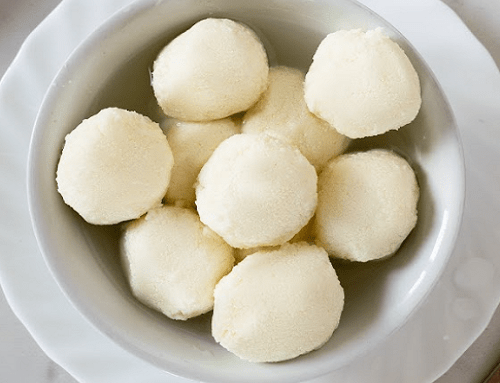
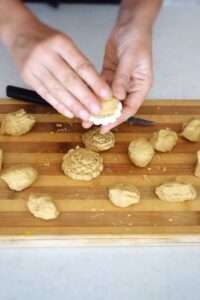
- Divide the mixture into 16 equal portions. Roll each into a small ball.
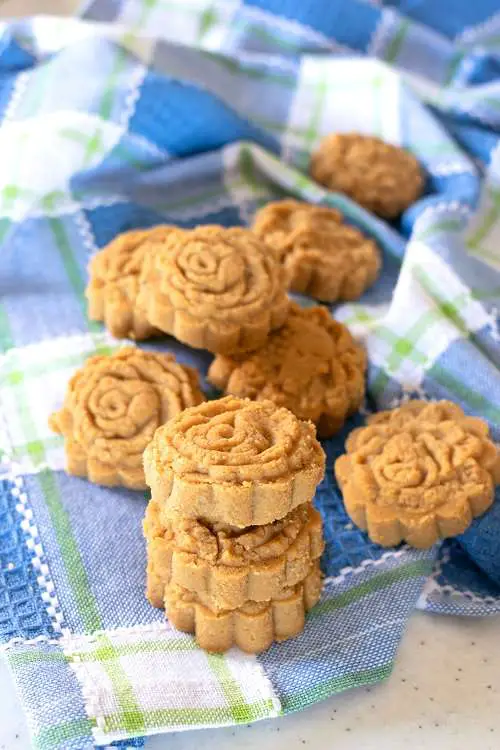
- Optionally, press each ball gently into a greased shondesh mold for a traditional look.
- Serve your shondesh at room temperature as a delicate sweet treat for tea or as a dessert.