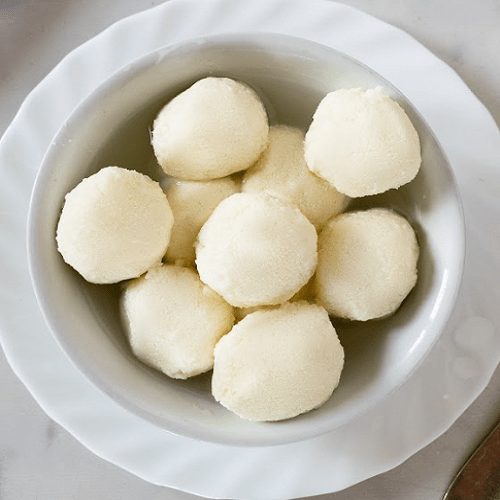
Roshogolla – Bengali Sweet Recipe
Roshogolla is one of the most popular Bengali sweets in the world. And it is rightly so. It is one of my favorites, and I mean that with my whole heart. No matter how much I want to skip sugar, I can never say no to roshogolla.
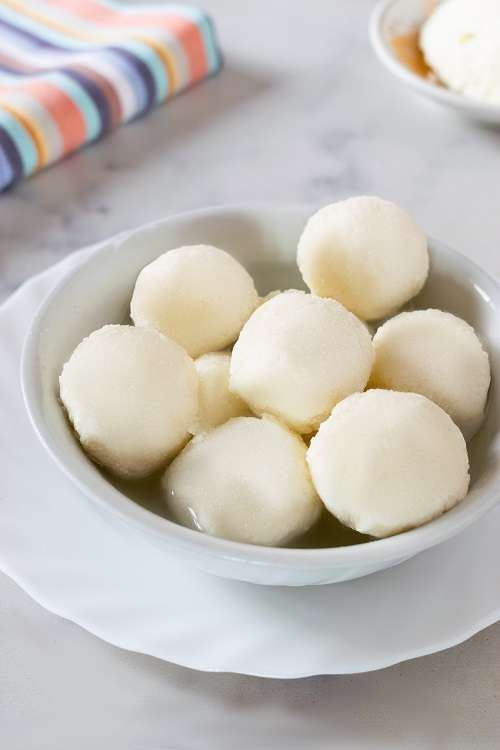
There is something magical about biting into that soft, spongy white ball soaked in sugar syrup. As a child I used to say I have a round space left in my stomach for Rosogolla even after a full dinner.
Now if you are wondering what is a rasgulla made of? It is actually quite simple. Roshogolla is made from chhena – that fresh cheese we make by curdling milk. You knead the chhena with a little flour and sugar, shape it into balls, and cook them in sugar syrup until they become soft and spongy. That is it. Simple ingredients, but the technique takes practice.
One thing that confuses people is the name. Roshogolla and rasgulla are the same thing – just a difference between Bangla and Hindi pronunciation. In Bengali we say roshogolla, in Hindi they say rasgulla.
Some people even call it “shada misti” or white sweet because of its color. But honestly, that name lacks soul. It is too generic, too plain. Roshogolla has character, history, emotion attached to it. Shada misti just describes what you see.
Now the history of roshogolla is fascinating, and also a bit controversial! Which city is famous for Rosogolla? Both Odisha and West Bengal claim to be the birthplace of this iconic sweet, and let me tell you, this debate gets heated.
Odisha says roshogolla has been offered at the Jagannath Temple in Puri since the 12th century. They call it Khira Mohana there, and it is part of a religious ritual called Niladri Bije. According to the legend, when Lord Jagannath returns from his Ratha Yatra, his wife Goddess Lakshmi is angry because he left without telling her. To appease her, he offers rasgullas. This tradition has existed for centuries.
But West Bengal tells a different story. They say the modern spongy roshogolla was invented in Kolkata in 1868 by Nobin Chandra Das, a confectioner who perfected the technique of making chhena-based sweets. His shop in Bagbazar became famous, and his descendants still run K.C. Das, one of the most iconic sweet shops in Kolkata.
The debate got so intense that both states applied for Geographical Indication status! In 2017, West Bengal got GI status for “Banglar Rosogolla” and in 2019, Odisha got it for “Odisha Rasagola.” So technically, both can claim it now. Bengalis and Odias are still fiercely proud of their versions!
Now you might wonder, what is India’s no. 1 sweet? Many will say Gulab amun. But if you ask Bengalis, they will say roshogolla without hesitation. In West Bengal, roshogolla is not just a sweet, it is a cultural icon. Every celebration, every festival, every happy occasion involves roshogolla.
I remember growing up, whenever guests came over, my mother would send someone to get roshogolla from the sweet shop. Not any sweet shop, mind you. The specific shop that made the best roshogolla in the neighborhood. Because not all roshogollas are equal. Some are too sweet, some are too hard, some are too big. The perfect roshogolla is soft, not too sweet, and just the right size.
 People often ask, is rasgulla same as gulab jamun? They are not! They might look similar – both are round, both are soaked in syrup – but they are completely different. Gulab jamun is made from khoya or milk powder, it is brown, denser, and much sweeter. Roshogolla is made from chhena, it is white, spongy, and lighter. Gulab jamun is fried, roshogolla is boiled. Two completely different sweets!
In Bangladesh, roshogolla is equally beloved. Every sweet shop has it, every celebration features it. We have our own famous shops that have been making roshogolla for generations. The recipe might vary slightly – some shops add rose water, some add cardamom – but the love for it is universal.
What I find amazing is how something so simple has become so iconic. It is just chhena and sugar syrup, but it represents so much more. It represents Bengali culture, Bengali pride, Bengali joy.
Making roshogolla at home is challenging though, I will not lie. The chhena needs to be kneaded perfectly – not too much, not too little. The balls need to be smooth with no cracks. The syrup needs to be at the right consistency. And the cooking time has to be exact. Too little and they stay hard, too much and they break apart.
Today, roshogolla has traveled beyond India and Bangladesh. You can find it in South Asian grocery stores worldwide. ISRO is even developing dehydrated roshogolla for astronauts! From temple offerings to space food – that is quite a journey.
Ingredients
- 1 liter full-fat milk - For Balls
- ¼ cup lemon juice or as needed to curdle the milk - (For Balls)
- 1 teaspoon all-purpose flour - For Balls
- 1 teaspoon sugar - For Balls
- ¼ teaspoon cardamom powder optional - (For Balls)
- 4 cups water For Syrup
- 1 cup sugar For Syrup
- 2 –3 tablespoons rose water For Syrup
Instructions
- Heat the milk in a saucepan and bring it to a boil. Once boiling, reduce the heat and add lemon juice gradually while stirring until the milk curdles. Remove from heat immediately.
- Pour the curdled milk through a cheesecloth to separate the solids. Rinse the chhana under cold water to remove the lemony taste. Squeeze out as much water as possible or hang it overnight in a clean cloth until dry but soft.
- Transfer the chhana to a bowl and knead with the flour, sugar, and cardamom (if using) for about 1 minute, until smooth.
- Form 10–12 equal-sized smooth balls with no cracks.
- In a large saucepan, dissolve 1 cup of sugar in 4 cups of water. Bring to a boil.
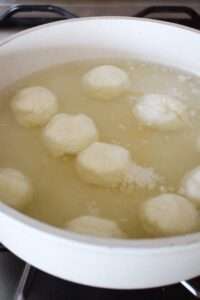
- Gently drop the balls into the boiling syrup. Cover and cook over medium heat for 20–25 minutes. The balls will expand in size.
- After 20 minutes, remove one ball and drop it into a bowl of cold water. If it sinks, it’s done. If it floats, continue cooking.
- Once done, remove from heat. Pour in the rose water and let the roshogollas cool in the syrup for 7–8 hours before serving.
- Keep refrigerated in the syrup for up to 4–5 days. Serve chilled or at room temperature.