Rani, Bou
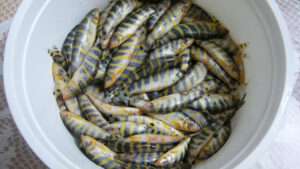
Rani means queen in Bengali and Bou means wife or bride, both names befitting this pretty little fish. Of course, Bengalis have a way of giving pretty-looking foods cutesy-type names. If you think calling a cute-looking fish Bou is too much, you should check out our mango variety names in Bengali—Gopalbhog, Mohanbhog, Misribhog—sweet, affectionate names that sound like terms of endearment. It’s just the Bengali way of celebrating the foods we love.
Rani is a freshwater fish found in Bangladesh’s rivers. This fish is known for its soft texture and sweet taste—the kind of taste that pairs wonderfully with our Bengali spices. Rani is also called Botia dario, Bengal loach, or queen loach. It belongs to the Botiidae fish family. This fish is commonly found in rivers in Bangladesh, Bhutan, and northern India. You can find them in the Brahmaputra and Ganges river basins, and in creeks and streams in northern and eastern Bangladesh.
Note: This Rani (Bengal loach) should not be confused with the “pink perch” fish, which is also locally known as Rani or Chiri in Bangladesh and India. The pink perch is a lean, tender, and flaky fish with a mild flavor, often found in estuaries and coastal waters—quite different from the sweet, delicate Bengal loach we’re celebrating here.
Description of Rani/Bou Fish
The Rani fish has a long body that is flat on the sides. Its back is more curved than its belly, and its head is flat. The mouth is small and faces downward. It has 4 pairs of whiskers (barbels) around its mouth. The body is yellow or yellowish with about 7 black stripes going across it. The fish has tiny scales and a forked tail fin. Most Rani fish grow to about 3-4 inches long, though some can reach up to 6 inches.
Great for Aquariam
 Many people love keeping Rani fish in home aquariums. They are fun little characters with great personalities. Keep them in groups of four or more if your tank is big enough, as they are social and peaceful. These fish are very tough and easy to care for. They eat all kinds of food, live a long time, and stay active. They eat pest snails, sinking pellets, algae wafers, fresh vegetables like cucumber and zucchini, and frozen foods like bloodworms and brine shrimp. They make great companions for other loaches and are perfect for creating a lively bottom-level community in your aquarium.
Big Health Benefits from Small Fish
You might think bigger fish like Rohu or Boal are healthier. But small fish like Rani are just as good for you. Plus, they cost less! A large study from Japan found something amazing. Women who ate small fish (including the bones) just one to three times per month had big health benefits. They had 32% lower risk of dying from any cause and 28% lower risk of dying from cancer. Let’s have a look at the benefits of eating small fish like Rani or Bou:
- Packed with Nutrients: Don’t let their size fool you. Fish like rani/bou contain everything your body needs. They have Omega-3 fatty acids, protein, vitamins (B12 and D), and minerals (calcium, iron, and magnesium). Consuming them regularly will help you get all the essential nutrients for your body.
- Fight Cancer: The Omega-3s in small fish help reduce inflammation. This is important because inflammation can lead to cancer. The protein also helps your immune system find and destroy cancer cells.
- Stronger Bones: Small fish are great sources of calcium and vitamin D. These keep your bones strong and prevent bone diseases. When you eat the soft bones of small fish like Rani, you get even more calcium.
- Better Brain: Fatty acids like omega-3s help your brain work better. They may also lower the risk of brain diseases such as Alzheimer’s.
- Safer to Eat: Small fish like bou fish have a lot less mercury and other harmful chemicals than big fish. Consuming a high level of these chemicals can increase the risk of cancer. So it is safer to eat small fish compared to the bigger ones.
Bengali Recipes with Rani/Bou Fish
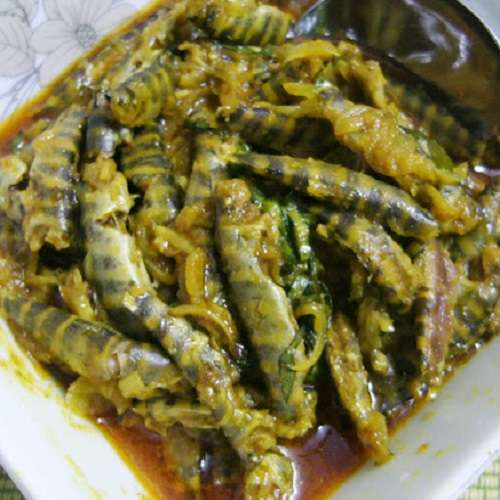
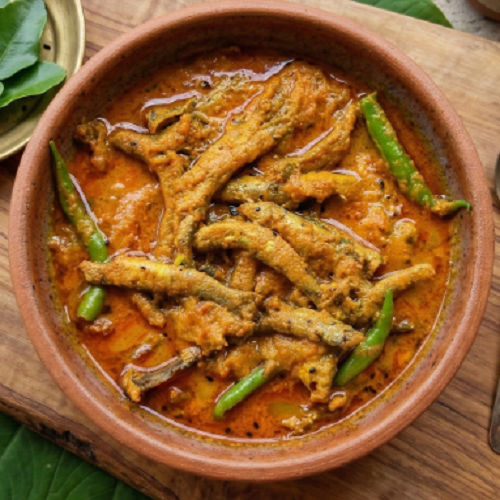
Rani Mach Bhuna (Bengal loach bhuna):
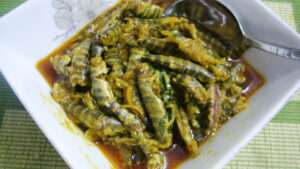 This is a very typical Sylheti recipe and honestly it captures everything magical about Sylheti cooking – a combination of bold use of spices and layers of flavor that make each bite unforgettable. This dish works beautifully with Rani fish or other small river fish. The secret is in the process:
- Marinate 500 gm of Rani pieces with cumin, coriander, turmeric, chili, and salt for 20 minutes to let the flavors sink in.
- Fry them in mustard oil until golden and crispy, then set aside.
- Use the same pan to build your sauce – sauté onions, garlic, and ginger until they turn golden and sweet, add tomatoes and let them break down into a rich base.
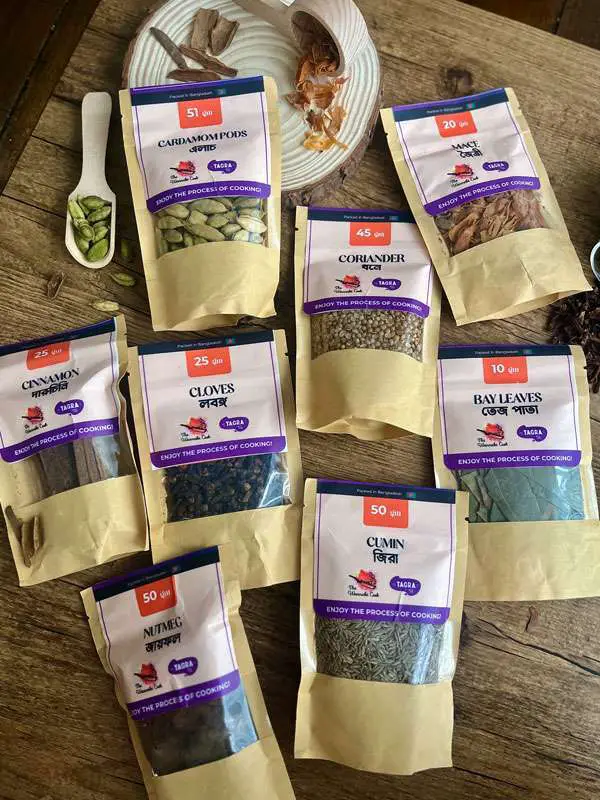
- Toast your spices (cumin, coriander, turmeric, chili, and garam masala) until they release their fragrance, add a splash of water, then add your fried fish back into the gravy.
- Let everything simmer together for 5-7 minutes so the fish soaks up all those beautiful flavors.
- Finish with fresh coriander leaves and serve hot – this is Sylheti home cooking at its finest.
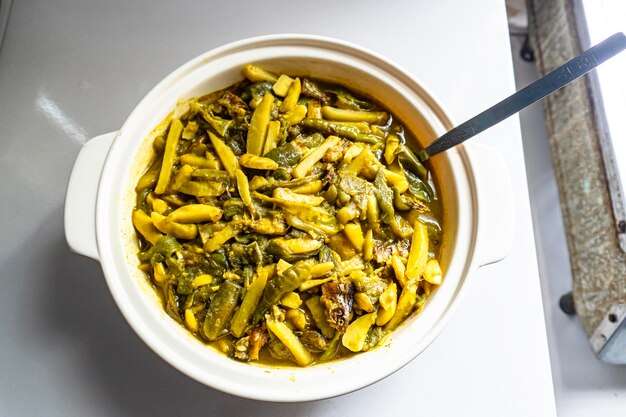
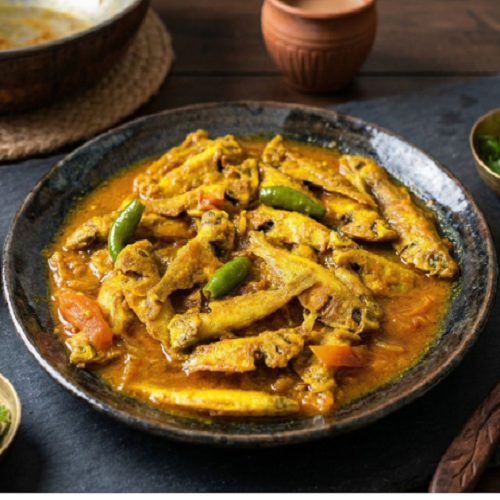
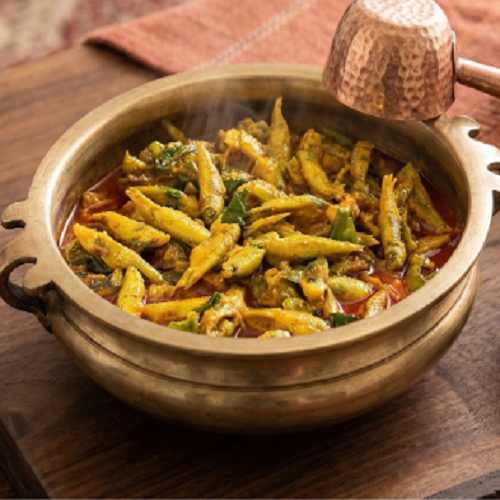
Bou Fish Curry with Vegetables
If you’re Bengali, you already know – fish and vegetables together just make sense. We can throw almost any vegetable with any fish and somehow it works. This “Sobji diye macher jhol” is what real comfort looks like in a pot. It’s not complicated, but it surely hits the spot. The broth alone is worth making this. The leftovers often pair well ruti (thin flatbreads made with atta, or unrefined flour) for breakfast the next day.
The dish looks vibrant on the table, smells incredible while cooking, and gives you all the protein and nutrients you need without feeling heavy. Here’s the beauty of it – you can use whatever vegetables are in season or sitting in your fridge. Spring peas, summer eggplant, autumn pumpkin, winter cauliflower – they all work. It’s basically a two-in-one meal that keeps you going all day. The health stuff speaks for itself. Vegetables help with blood pressure, heart disease, cancer prevention, and blood sugar control. Fish brings vitamin D, protein, and omega-3s. But honestly, you can just make it because it tastes good and comforting.
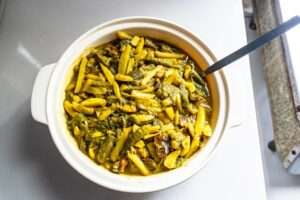 The recipe I am following uses bele fish but rani/bou fish works just as well.
- For veggies the recipe uses potatoes, long beans (borboti), and eggplant (begun), but feel free to swap in your favorites.
- Heat mustard oil and fry chopped onions until golden.
- Add ginger-garlic paste, turmeric, red chili powder, and a splash of warm water.
- Cook for 5 minutes.
- Toss in your vegetables (about 750 gm total) and let them cook for 10 minutes.
- Slowly add in your fish pieces (500 gm), add salt and boiled water, cover and let everything simmer for 15-20 minutes.
- Garnish with green chilies, coriander powder, and fresh coriander leaves.
- Serve with steaming rice, maybe with some lebur achar and daal (optional) and your are in for Bengali homestyle treat.



Follow Us: