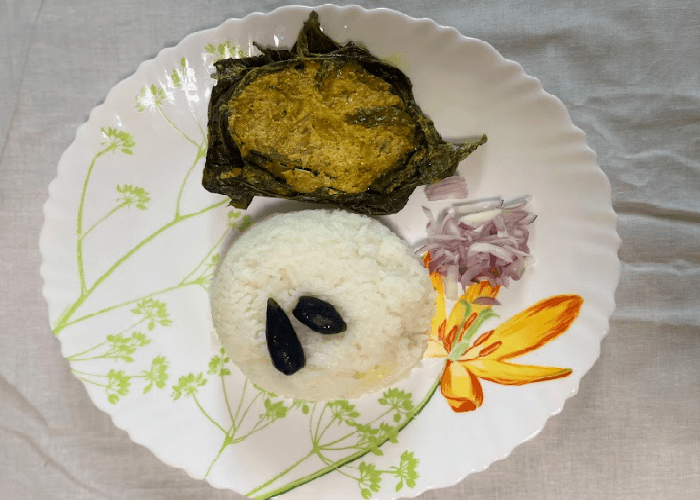
Hilsa Fish Paturi Recipe
Nature and geography plays a crucial role in defining the cuisine of any nation. The same is true for Bengali cuisine. Just take a look at our dishes and you will know how dependent we are on fish and leafy green vegetables.
“মাছে ভাতে বাঙালি” (Mache Bhaate Bangali) or “Fish and rice make the Bengali” is an old but still true Bengali proverb. The lands of Bengal (Bangladesh and West Bengal) are filled with rivers and waterways. That’s why we depend on fish so much.
Today’s recipe is the perfect example of the influence of both river and nature on Bengali cuisine. Fish Paturi is a special kind of recipe where the fish is enveloped in a banana leaf and steamed.
Who invented Paturi? Paturi comes from a Parsi dish, Patra ni machhi. I always assumed that this particular dish originated in Bengal, so it was quite a cultural shock.
 I also did not know what a Parsi dish meant, I thought it meant Persian cuisine. But specifically it is a mix of Persian and Indian cuisine. And based on my limited Hindi, Patra ni machhi could mean fish with leaves. So it all makes sense.
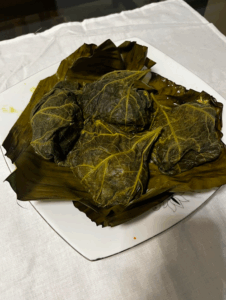
Now how is Paturi made? Any fish or macher paturi is made using wraps of banana leaf. The fish is wrapped or enveloped in the leaf, and then is steam cooked with different spices.
The seasoning and banana leaf, and of course the fish, give off an enticing aroma. And especially if you are cooking, Ilish Paturi the scent is heavenly.
Which fish is used for Paturi? You can make paturi with other fish like bhetki, but Ilish paturi recipes are the most popular. The flavor of steamed hilsha wrapped in banana leaves is absolutely unique.
The Ilish paturi recipe is a certain type of Patra ni machhi recipe. But the difference lies in the ingredients used for seasoning. Patra ni machhi recipes use chutney, while macher paturi recipes rely on mustard and other spices.
[/fusion_text]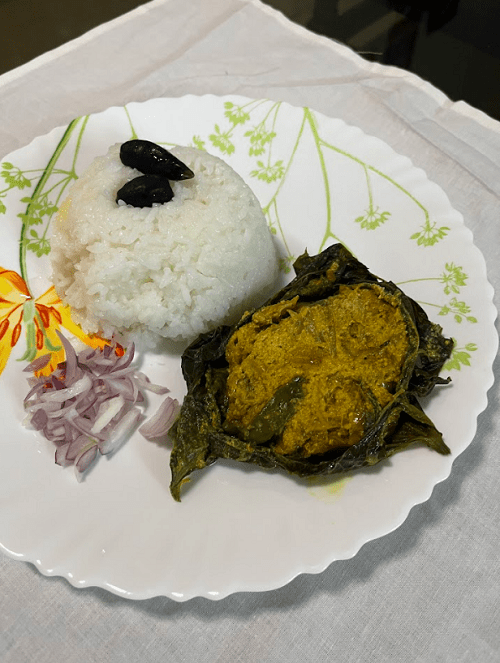
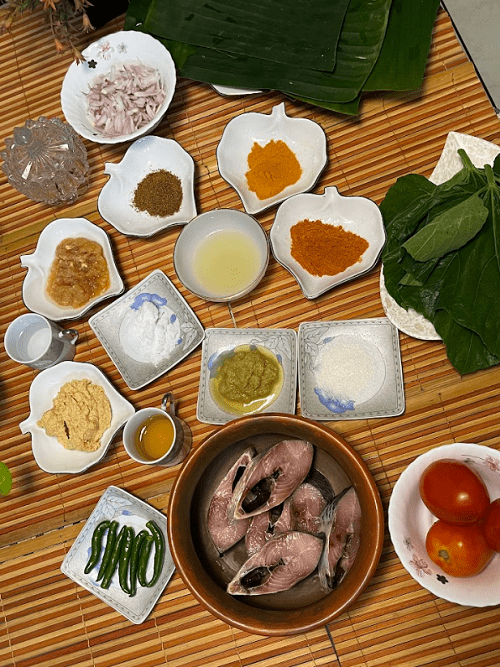
Ingredients
- Hilsha Elish fish – 4 pieces
- Salt – to taste
- 1 tablespoon Onion paste
- 2 tablespoon Mustard paste
- 1 teaspoon Cumin powder
- 1 teaspoon Turmeric powder
- 1 teaspoon Red chili powder
- 1/2 cup Sliced onions
- 6-7 Green chilies whole or slit
- 4 Bottle gourd leaves cleaned and washed
- 2 Banana leaves for lining and covering
Instructions
Step 1: Marinate the Fish
- Clean the Hilsha fish pieces thoroughly and place them in a bowl.
- Add the following ingredients:SaltOnion paste (1 tbsp)Mustard paste (2 tbsp)Cumin powder (1 tsp)Turmeric powder (1 tsp)Red chili powder (1 tsp)Sliced onions (½ cup)Green chilies (6–7)
- Mix all the ingredients well with the fish so that each piece is evenly coated.
- Let the fish marinate for at least 20–30 minutes
Step 2: Prepare the Wraps
- Take the washed bottle gourd leaves and pat them dry.
- Place one marinated Hilsha piece in the center of each leaf.
- Wrap each fish piece tightly with the leaf, folding it neatly to secure the marinade inside.
Step 3: Steam Cook the Fish
- Take a cooking pot and line the bottom with one banana leaf..
- Place the wrapped fish parcels on the banana leaf in a single layer.
- Cover the fish parcels with another banana leaf, ensuring all are fully enclosed.
- Put a lid on the pot.
- Note1. You can cook this on low flame for about 20–25 minutes, allowing the fish to steam in its own juices and the aroma of the leaves.2. No water is required in the pot if cooking over low heat, as the banana and bottle gourd leaves retain moisture. Alternatively, use a steamer.
Step 4: Serve
- Once cooked, turn off the heat and let it sit for a few minutes.
- Gently unwrap the bottle gourd leaves.
- Serve the delicate, flavorful Elish Paturi hot with plain steamed rice.
Notes
- Use fresh mustard paste for authentic pungency.
- Bottle gourd leaves should be tender and green (not too mature).
- For extra aroma, lightly wilt the banana leaf over flame before using.