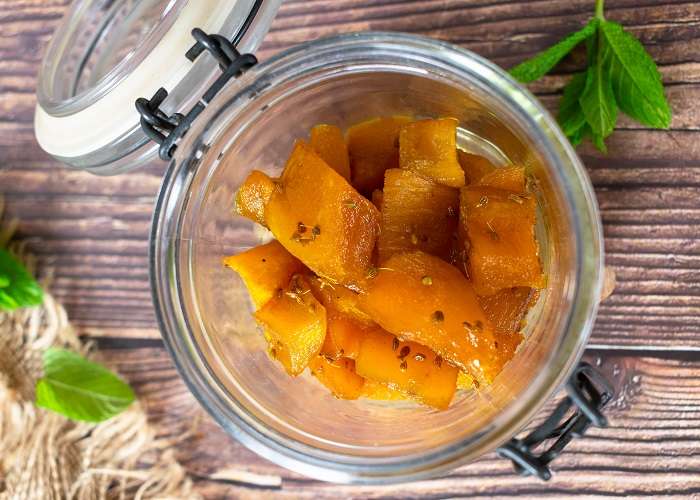
Pickled Mango Recipe
I used to think pickle or achaar is a Bengali tradition. I was never a fan of sour food, so pickles or achaar never interested me much. As a kid I thought it was just a special kind of Bengali cuisine with strong flavors.
But now I know that pickles or Achaar is not just a Bengali thing. And it has a special reason for being made the way it is: preservation. Mango Pickle, or any other pickle is specially made to preserve the pickle ingredient.
Since pickles were made to be preservable, they do not need to be refrigerated. The excess oil does the work of fighting off bacteria.
Now achar or pickle is a type of preserving method that is used worldwide. But the tradition did start in this subcontinent. The earliest known record of achar or pickle is of mangoes. But Ayurvedic and Sangam period texts refer to other varieties of pickles as well. Stone apple (beal), lime, raw cardamom, long pepper, and so many other pickle recipes can be found in ancient and medieval texts.
But these achar recipes evolved over time. The influence of concurrent rulers, and their trade policies played a huge part in this. Like the Portuguese first brought chilli peppers in this subcontinent during the Mughal Rule. And now chillies are a very popular ingredient for pickle recipes.
Now pickle or achar both refer to fermented, preserved condiments. Leaving the definition of achar there would be a big injustice. I have never had western pickle, but I am sure it does pack the flavor and kick of achar. (Just pickle Rick is an exception.)
Western pickles, be it homemade pickle or factory made, typically use vinegar or brine for preservation. And the flavors are sour, salty, and sometimes sweet.
Now today’s recipe goes against the need for preservation. This winter pickle recipe is achar or pickle just for the taste. Oh what a delicious mango pickle recipe this is.
This pickled mango recipe is being called a winter pickle because of the jaggery (gur) used in the recipe. Jaggery is available in Bangladesh during the winter, so you can make this mango pickle only during the winter. Hence it is called winter pickle.
There are plenty of ways on how to make mango pickle, but this recipe is special because of the jaggery. As mango is a summer fruit, mango pickle is generally made during the same season. My mother even made a few different kinds of mango pickle last week.
These sour mango pickle benefits the eater by providing vitamin C. The sourness helps regulate the body temperature during the hot summer days.
But I would call this winter pickle recipe the best mango pickle. That is purely because of the flavor that the jaggery adds. This unique winter pickle ingredient makes the achar stand out among other mango pickle recipes.
FAQs
Is it healthy to eat mango pickle?
Yes, eating mango pickle is healthy as long as you are not allergic to any of the ingredients, and you are having it in moderation.
Is mango pickle the same as mango chutney?
No, mango pickle or achar is very different from mango chutney. Mango chutney is a dessert made with mangoes, it is not meant to be preserved over a long time. Mango pickle on the other hand is not like a dessert, and it is meant to be preserved for months.
How much mango pickle can I eat?
There is no specific limit on how much mango one can eat. In general it is good to exercise moderation, and be aware of your own dietary restrictions.
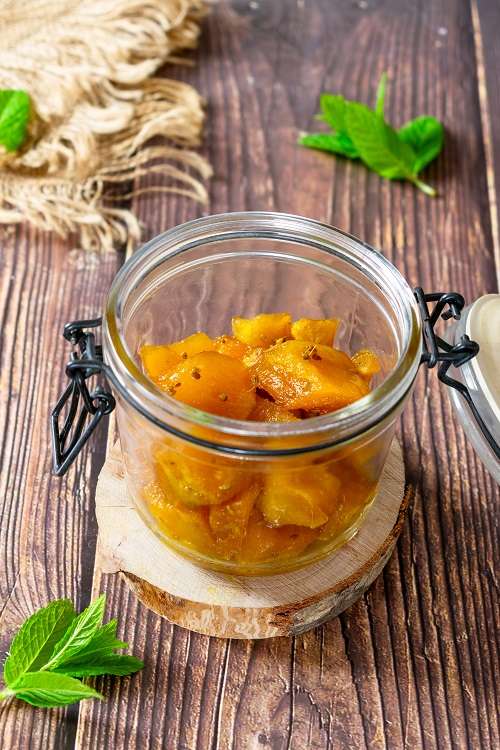
Ingredients
- 1 kg 2 ½ lb mangoes, cut into large pieces
- 200 g 1 cup jaggery, melted
- Salt to taste
- Ground pepper to taste
- 2 tablespoons ginger paste
- 240 ml 1 cup water
- Generous amount of fennel seeds
- Small amount of fenugreek powder
- Small amount of mustard oil for mixing and coating
Instructions
- Cut the mangoes into large pieces and add them to the melted jaggery in a large bowl.
- To the mango-jaggery mixture, add salt, ground pepper, and ginger paste. Pour in water and mix well to combine all the ingredients.
- Transfer the mixture to a pan and boil until the mangoes are cooked. Once done, remove the mango pieces and place them on a large tray to cool.
- Allow the mango pieces to sun-dry for a few days until the syrup coating them dries up.
- Once the syrup has dried, sprinkle a generous amount of fennel seeds, a small amount of fenugreek powder, and a little mustard oil over the mango pieces. Mix well to coat the mango pieces evenly.
- Place the mango pieces back in the sun for further drying. Ensure they are completely dried before the next step.
- Before storing the pickle in jars, apply a little more mustard oil over the mango pieces to preserve them well.